

Make International Education a Public Commitment! CCU ELTA Center Organizes Collaborative Teaching Capacity-Building Workshop
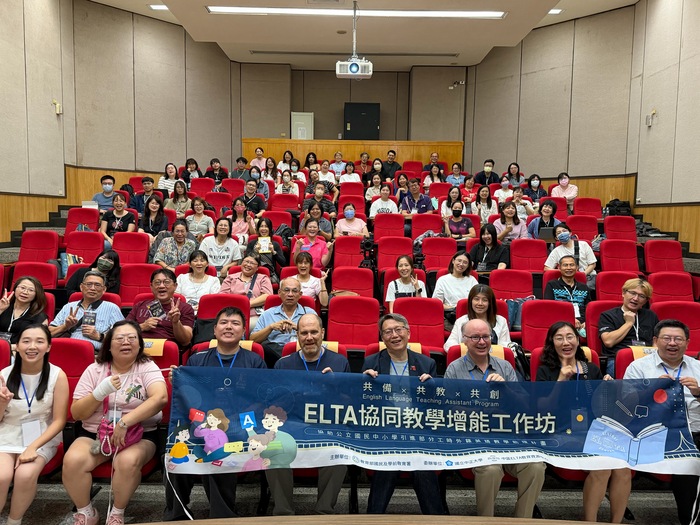
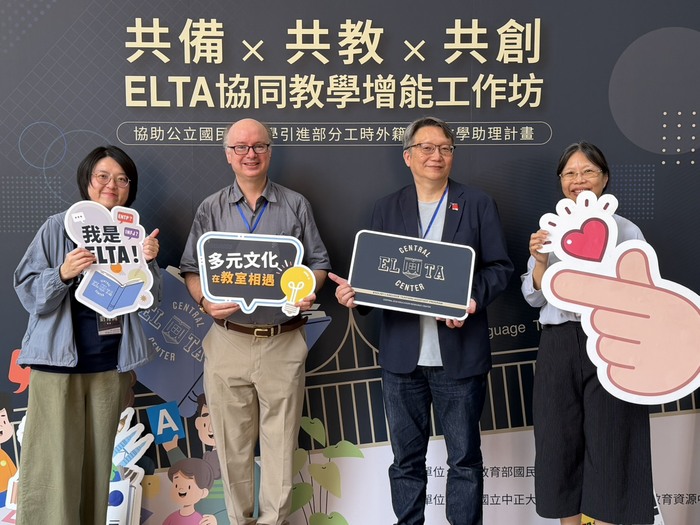
To advance equity and sustainability in bilingual education, the Central English Language Teaching Assistant (ELTA) Center at National Chung Cheng University (CCU) held the “Co-Planning × Co-Teaching × Co-Creation: ELTA Collaborative Teaching Capacity-Building Workshop” on July 3. The event focused on how local teachers could effectively collaborate with ELTAs to bring global perspectives into classrooms, attracting enthusiastic participation from educators across the region.
The workshop featured a keynote lecture by Chi-Hsin Wu, Associate Professor in the Department of Labor Relations at CCU. His presentation, titled “ELTA Labor Rights and Legal Practices,” provided participants with a comprehensive understanding of the legal regulations and labor protections applicable to ELTAs during their service in Taiwan.
The lecture covered a range of critical topics, including ELTAs’ legal status, employment regulations, work permit application procedures, working hours, wage requirements, labor insurance, occupational injury protection systems, income tax filing, and work permit validity periods. Professor Wu noted that as Taiwan continued to promote its bilingual education policies, schools needed to pay attention not only to instructional collaboration and curriculum design, but also to the labor rights and legal compliance associated with employing ELTAs. He emphasized that establishing accurate legal knowledge and effective administrative support mechanisms could help safeguard ELTAs’ rights, reduce institutional risks in recruitment and collaboration, and foster a more supportive and welcoming international education environment.
The workshop also featured three experienced education practitioners who shared valuable insights from their professional practices. Yu-Lan Hsieh from Longhua Junior High School spoke on “Expectations and Practices in Co-Teaching with Foreign Educators”. She emphasized that collaborative teaching was not merely a task to be completed but also an opportunity for teachers’ professional growth. She shared practical lesson-planning strategies and approaches for addressing common challenges in co-teaching settings. Meanwhile, Chia-Hui Chen from Qiaoxin Elementary School led a session on “ELTA Activity Cases and Strategies for Overcoming Challenges,” using real classroom examples to help teachers strengthen their ability to respond effectively to instructional challenges.
In another session, Ben, an ELTA advisor from the Chiayi City English Education Resource Center, together with co-presenter Billy, delivered a presentation titled “From Cultural Exchange to English Learning: Making ELTA Classrooms More Meaningful”. Drawing on years of experience supporting schools in implementing the ELTA program, they shared observations and practical recommendations. Ben highlighted that the value of ELTAs extended beyond providing English-language resources; they also brought diverse cultural backgrounds and international perspectives, creating authentic opportunities for students to develop intercultural understanding through real interactions. He further emphasized that ELTAs were students first and teaching assistants second. Therefore, teachers needed to recognize each ELTA’s strengths and characteristics and thoughtfully design roles and learning activities that enabled them to make the greatest impact.
Professor Sheng-Yao Cheng, Professor at the Graduate Institute of Education and Project Director of the ELTA Program at CCU, underscored that international education should not be regarded as an “added-value package” available only to a privileged few, but rather as a public commitment that the government owed to every child.
“As educators, our goal is to bring international education back into everyday classrooms and learning experiences,” Professor Cheng remarked. “Through national resources such as the ELTA program, we can remove the perception that international education is a privilege and ensure that students in both rural and urban communities have equal opportunities to encounter the world from within their classrooms. More importantly, we want them to develop the confidence to share their own stories with the world.”
Following the presentation, the CCU ELTA Center noted that collaborative lesson planning and professional exchange among local teachers could effectively reduce instructional burdens while enhancing teaching expertise. Looking ahead, the Center would continue serving as a strong support system for educators, working together to create a bilingual learning environment that is both culturally confident and inclusive.