

CCU AI Center and NCSIST Deepened Collaboration on Intelligent UAV Platform Research and Development
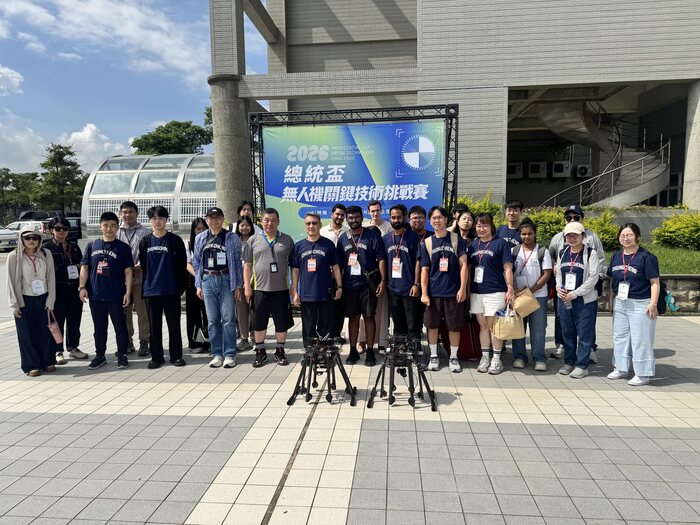
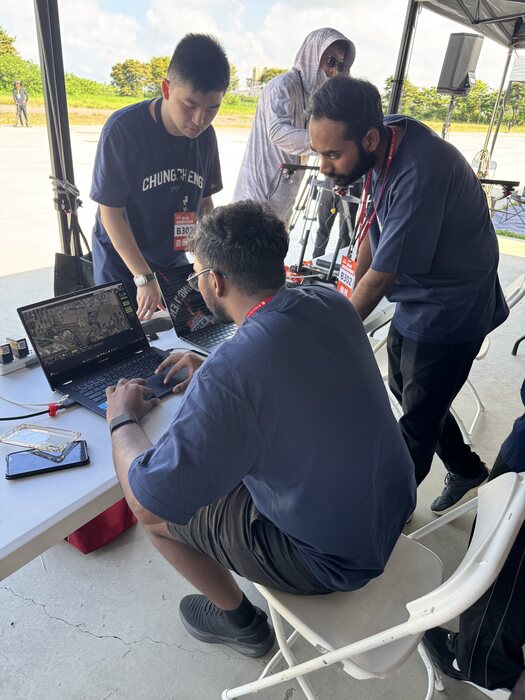
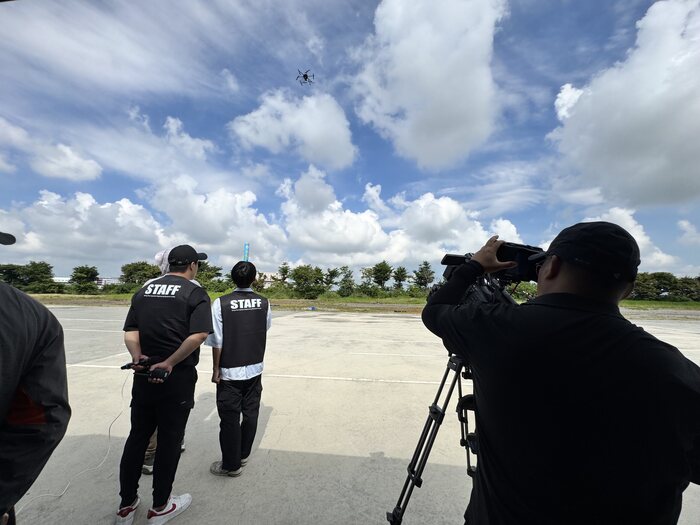
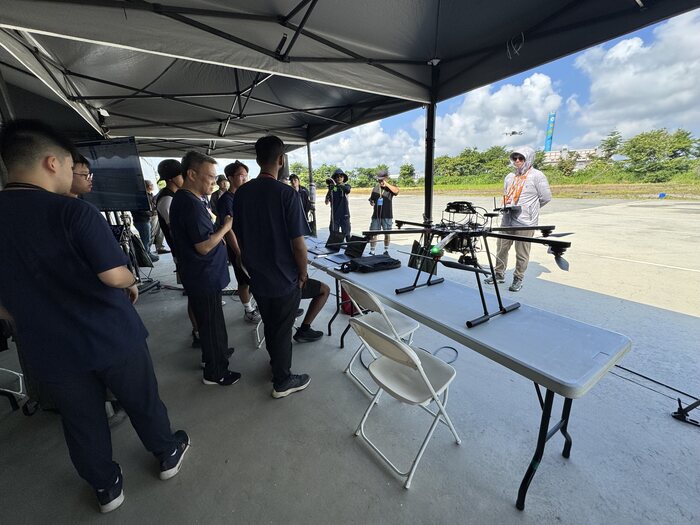
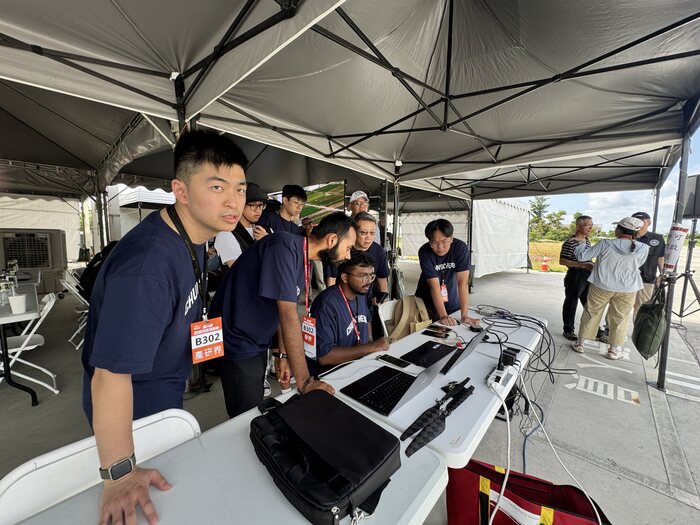
The Research Center on Artificial Intelligence and Sustainability (AI Center) at National Chung Cheng University recently launched a collaborative initiative with the Guidance and Control Division of the Information and Communication Research Institute under the National Chung-Shan Institute of Science and Technology (NCSIST), focusing on AI applications for UAV platforms, communication integration, and system verification. The 2026 Presidential Cup Drone Technology Challenge served as an important platform for technical exchange and hands-on validation between both parties. Led by Prof. Pao-Ann Hsiung, Director of the AI Center, a research team composed of Taiwanese and international students participated in the competition's preparation and testing. This collaboration not only reflected the AI Center’s long-term commitment to interdisciplinary talent cultivation and AI-enabled UAV applications, but also further bridged the gap between academic research and practical implementation, thereby deepening cooperation in UAV platforms, communication integration, and AI technologies. More importantly, it injected new momentum into Taiwan’s efforts to strengthen its indigenous UAV AI capabilities, expand industrial applications, and enhance overall research and development capacity.
As the government continued to actively promote the UAV industry, unmanned aerial vehicles became one of Taiwan’s key strategic technology sectors. The AI Center had long been engaged in AI research and real-world implementation, with particular strengths in the design and application of edge AI systems for intelligent UAVs, which extended to research in disaster reconnaissance, search and rescue, and disaster assessment. Through academic publications, competitions, field validation, and hands-on technical implementation, the Center cultivated interdisciplinary talent with expertise in intelligent systems, communication control, and system integration, helping students engage early with Taiwan’s UAV industry and the research and development needs of the non-red supply chain.
For this year’s Presidential Cup competition, the AI Center’s team of Taiwanese and international students worked closely with the Guidance and Control Division of NCSIST throughout the preparation process. From understanding competition regulations and planning mission workflows to equipment preparation, hardware–software integration, and pre-competition testing, the entire process was carried out through close collaboration between both sides. By participating in this national-level competition, the team gained valuable hands-on experience in UAV AI applications, mission execution, and system verification, while also deepening its understanding of Taiwan’s UAV industry needs and interdisciplinary collaboration models. This experience further highlighted the achievements and future potential of the partnership between the AI Center and NCSIST in the field of intelligent UAV platforms.
According to the AI Center, using the competition as a validation platform not only strengthened the research team’s integration and implementation capabilities in UAV AI applications, but also opened up more concrete directions for future collaboration. Building on this foundation, the AI Center’s research team would continue to deepen cooperation with NCSIST in areas including digital twins, AI applications, AI governance, and remote guidance and communication technologies. By leveraging both sides’ strengths in talent, equipment, technology, and academic research, the collaboration aimed to further expand research capacity in intelligent UAV platforms and smart mobility systems, while continuing to respond to Taiwan’s strategic needs in UAV AI key technologies and industrial applications.
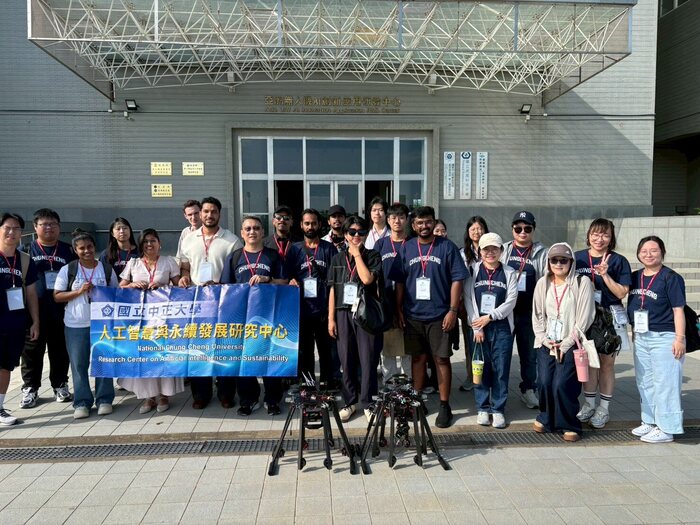
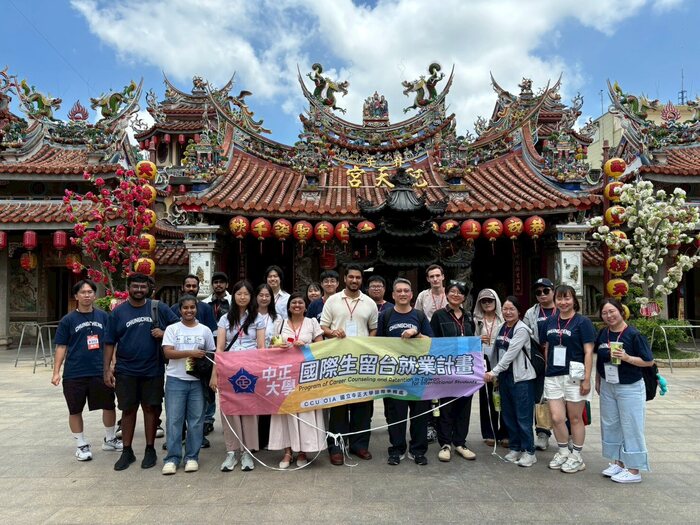
In addition, on July 9, the AI Center arranged for international students and overseas interns to visit the Asia UAV AI Innovation Application R&D Center to observe the competition, followed by visits to Puzi Peitian Temple, the Puzi traditional market, and the Southern Branch of the National Palace Museum. Supported by the Office of International Affairs under the Project on Promoting International Student Recruitment and Retention, the visit combined industrial exposure with cultural immersion, helping international students and overseas interns gain a deeper understanding of Taiwan’s UAV industry, research environment, and local culture. It also further strengthened their connection to future opportunities in UAVs, smart mobility, and advanced AI-driven application industries in Taiwan after completing their studies.