

National Chung Cheng University Presented Academic Awards for the 2025–2026 Academic Year, Honoring 18 Faculty Members
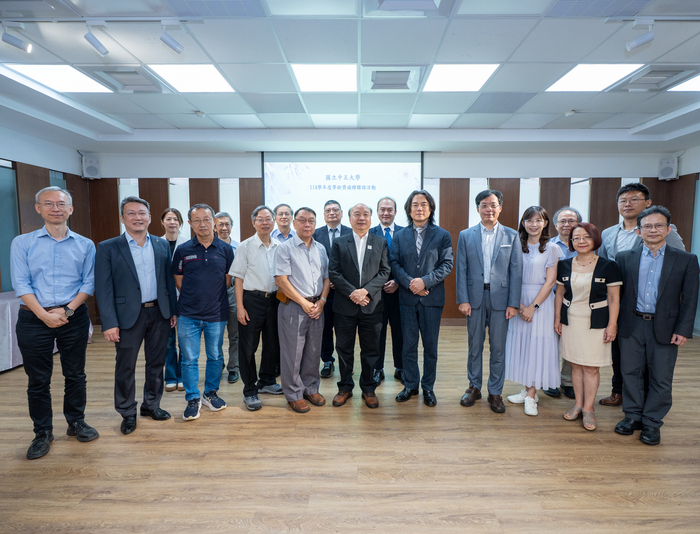
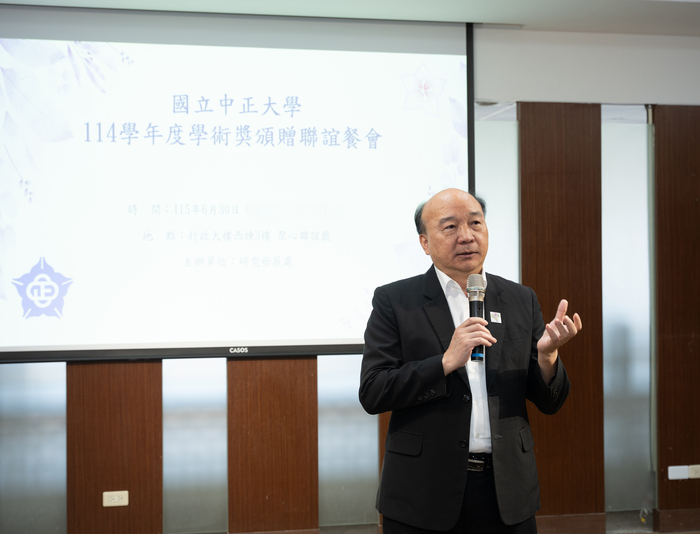
To recognize faculty members’ long-term dedication to academic research and their sustained scholarly achievements, National Chung Cheng University held its Academic Awards Presentation and Networking Luncheon for the 2025–2026 academic year on June 30, 2026. The awards and honors presented included the “Bauhinia Scholar Award,” “Distinguished Professor” honors in Categories I and II, the “Outstanding Research Award,” and the “Young Scholar Award.” A total of 18 faculty members were honored this year, with two individuals each receiving two distinctions, bringing the total number of awards and honors conferred to 20. Their research fields spanned the humanities and social sciences, science and engineering, management, and education. President Shaw-Jenq Tsai attended the event to honor the awardees and recognize their sustained research achievements, reflecting the university’s interdisciplinary and steadily developing research capacity.
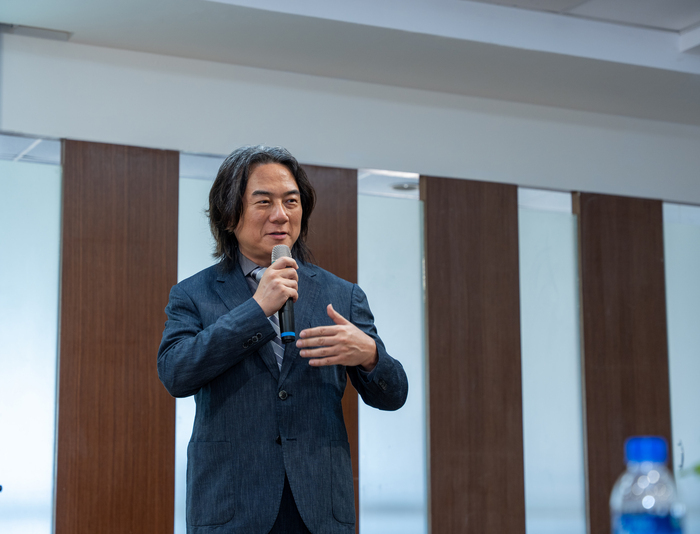
This year’s “Bauhinia Scholar Award” was presented to Professor Sheng-Ju Chan of the Graduate Institute of Education and Professor Her-Terng Yau of the Department of Mechanical Engineering. Established through a donation by Dr. Ben Jai, Founder and Chairman of Hope Bay Technologies, the award recognized faculty members under the age of 55 who had demonstrated outstanding cumulative academic research performance. Each awardee received a cash prize of NT$500,000. This year marked the second presentation of the award since its establishment. Dr. Ben Jai also attended the event to present the trophies.
The two recipients had made long-standing contributions to the humanities and social sciences and to engineering technology, respectively. Professor Sheng-Ju Chan had long been engaged in research on higher education policy, comparative education, and higher education management. He also served as Associate Editor of the International Journal of Educational Development, published by Elsevier, and as co-editor of the Springer-supported book series Higher Education in Asia. Professor Her-Terng Yau had long been engaged in applied research on smart machinery and, in recent years, had pursued forward-looking work in silicon photonics. He made important contributions to advancing the smart transformation of the machine tool industry and to cultivating advanced talent in next-generation chips and optoelectronic integration. He had also been named among Stanford University’s World’s Top 2% Scientists for five consecutive years from 2021 to 2025, in both the Career-long Impact and Single-year Impact rankings.
For the Distinguished Professor honors, eight faculty members were appointed as Distinguished Professors, Category II this year: Professor Lai-Kwan Chau of the Department of Chemistry and Biochemistry, Professor Sheng-Fuh Chang of the Department of Communications Engineering, Professor Hong-Tzong Yau of the Department of Mechanical Engineering, Professor Shyh-Leh Chen of the Department of Mechanical Engineering, Professor De-Shin Liu of the Department of Mechanical Engineering, Professor Yuan-Yao Li of the Department of Chemical Engineering, Professor Shin-Yuan Hung of the Department of Information Management, and Professor Sheng-Ju Chan of the Graduate Institute of Education. Their research fields included, respectively, chemical and biosensors, RF and microwave integrated circuits, smart manufacturing and digital dentistry, control and applications of magnetic levitation systems, unmanned aerial vehicles, computational mechanics and electronic packaging, knowledge management and decision support systems, and higher education policy.
Another six faculty members were appointed as Distinguished Professors, Category I: Professor Shiu-Hwa Tsu of the Department of Philosophy, Professor Yuan-Hsi Lee of the Department of Earth and Environmental Sciences, Professor Chien-Yen Chen of the Department of Earth and Environmental Sciences, Professor Ding-Yu Jiang of the Department of Psychology, Professor Pao-Ann Hsiung of the Department of Computer Science and Information Engineering, and Professor Her-Terng Yau of the Department of Mechanical Engineering. Their research fields included, respectively, moral philosophy and AI ethics, orogeny and tectonics, biomineralization and environmental microbiology, Chinese organizational behavior and cross-cultural psychology, artificial intelligence and embedded systems, and signal processing and big data analysis.
The recipient of this academic year’s “Outstanding Research Award” was Professor Yen-Ling Chen of the Department of Chemistry and Biochemistry. Professor Chen specialized in the development of high-sensitivity bioanalytical technologies. By integrating capillary electrophoresis, nanomaterials, and nucleic acid signal amplification technologies, she established highly specific biosensing systems. Her research could be applied to biomedical analyses related to Alzheimer’s disease biomarkers, genotyping, and therapeutic drug monitoring.
The “Young Scholar Award” was presented to three young scholars in recognition of their achievements and innovative work in their respective research fields. Associate Professor Min Yang of the Department of Foreign Languages and Literature focused on language learners, preservice teachers, and teacher educators, examining the development of their beliefs, accumulated experiences, and the construction of self-identity in academic writing, research participation, teaching practice, and professional development. Associate Professor Jia-Lin Kang of the Department of Chemical Engineering specialized in the interdisciplinary integration of chemical process systems engineering and AI, combining deep learning, CFD simulations, and physical models to develop next-generation process fault diagnosis and digital twin technologies. Assistant Professor Van-Linh Nguyen of the Department of Computer Science and Information Engineering focused on key technologies in quantum communication security, 6G open network protection, and AI adversarial attacks, contributing strategic value to national cybersecurity and the communications industry.
The Office of Research and Development stated that, through the establishment of academic awards, National Chung Cheng University recognized faculty members’ long-term commitment to research and their achievements, while continuing to strengthen the university’s academic research capacity and promote the intergenerational transmission of academic experience. Looking ahead, the university would continue to support faculty members as they deepened their work across research fields, demonstrating the diverse strengths of a university in knowledge innovation, talent cultivation, and social contribution.