

TMU Vice President for Sustainability Shares SROI Best Practices at CCU USR Capacity-Building Workshop
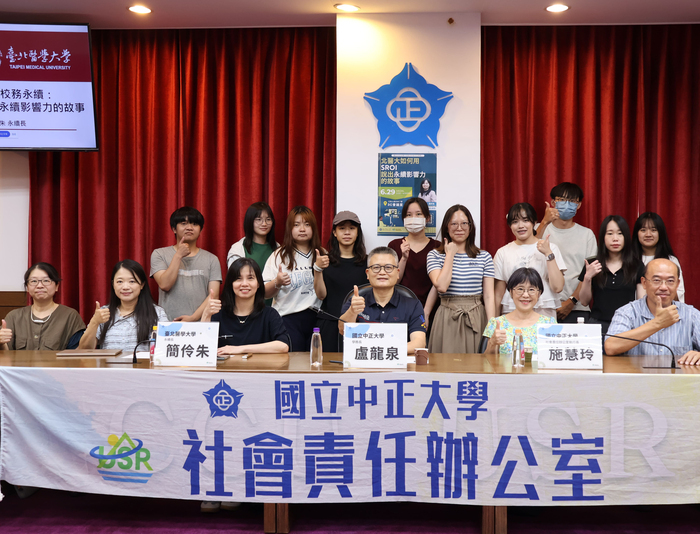
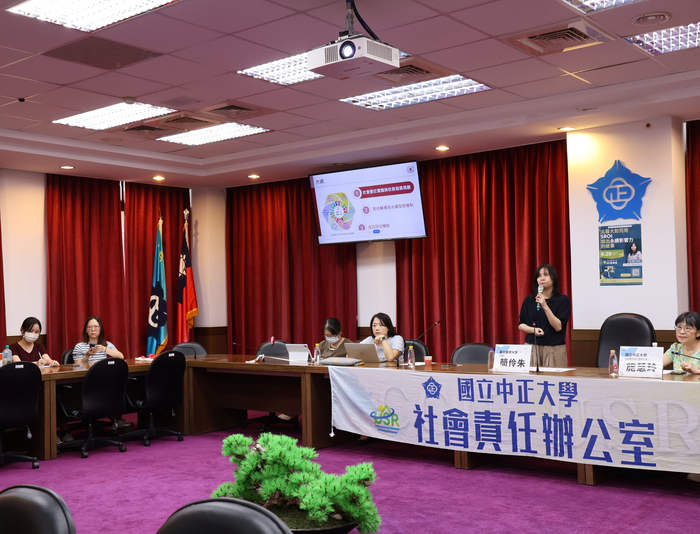
To help University Social Responsibility (USR) project teams better understand methods for evaluating social impact and to align with the Ministry of Education's policy of incorporating Social Return on Investment (SROI) into USR projects, the Office of University Social Responsibility at National Chung Cheng University (CCU) hosted the 2026 USR Capacity-Building Workshop on June 29. Centered on the theme, "How Taipei Medical University Tells the Story of Sustainable Impact through SROI," the workshop invited Professor Ling-Chu Chien, Vice President for Sustainability at Taipei Medical University (TMU), to share TMU's practical experience in implementing SROI. The event attracted USR project leaders, faculty members, administrative staff, and representatives from partner universities of the USR Alliance.
In recent years, Taiwan's Ministry of Education had continuously promoted the enhancement of University Social Responsibility initiatives by encouraging universities not only to deepen local engagement but also to demonstrate their social impact through both quantitative and qualitative approaches. Among these, Social Return on Investment (SROI) had become an important evaluation framework for USR projects. By systematically assessing changes experienced by stakeholders and assigning value to those outcomes, SROI enabled project teams to present the social benefits generated by their initiatives in a more concrete and measurable way, thereby strengthening project impact and long-term sustainability.
During the workshop, Professor Chien drew upon Taipei Medical University's extensive experience in advancing USR and institutional sustainability governance to illustrate how SROI could be integrated into university governance and USR project implementation. She provided a comprehensive overview of the SROI process, covering stakeholder identification, outcome mapping, evidence collection, proxy indicator selection, social value calculation, and impact communication. Through real-world case studies, she also demonstrated how quantitative data and compelling narratives could be combined to transform project outcomes into persuasive stories of sustainable impact, enabling the broader society to better understand the value created through USR initiatives.
Professor Chien also discussed the practical challenges encountered during SROI implementation, including data collection, stakeholder interviews, outcome attribution, and the selection of financial proxies. Drawing on TMU's years of experience, she shared practical strategies and solutions to help participants develop a comprehensive understanding of the SROI methodology. The workshop featured lively discussions, with faculty members actively exchanging ideas and raising questions on topics such as indicator design, survey development, outcome measurement, and impact analysis tailored to the characteristics of different USR projects.
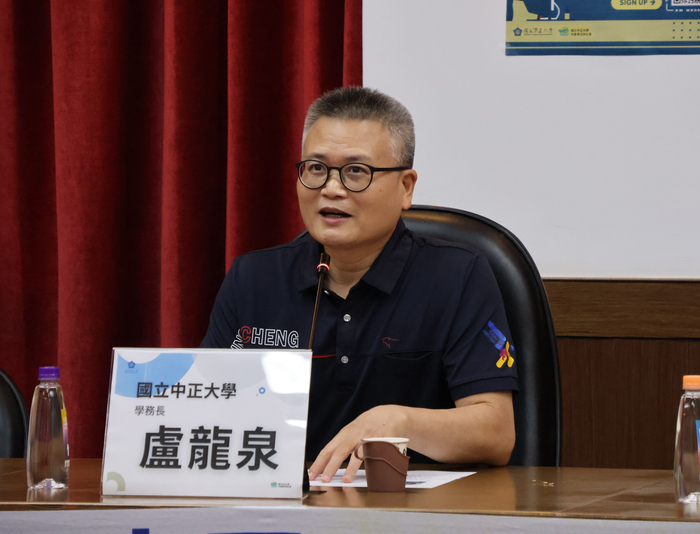
Professor Long-Quan Lu, Dean of Student Affairs and Deputy Director of the Office of University Social Responsibility at National Chung Cheng University, noted that as the Ministry of Education continued to advance USR programs and emphasize impact evaluation, CCU had incorporated SROI into the implementation of its USR projects. Through a series of capacity-building programs, workshops, and cross-project exchanges, the university had helped project teams gradually establish systematic impact evaluation mechanisms. This year, the Office continued assisting USR teams in stakeholder mapping, survey design, outcome data collection, and preliminary SROI analyses, with the goal of presenting, through a more systematic evaluation approach, the value and positive impact that CCU's USR initiatives created for local communities.