

From Gear Legend to Green Revolution: National Chung Cheng University Inaugurates the Advanced Green and Low-Carbon Manufacturing Base to Empower Industrial Net-Zero
National Chung Cheng University Inaugurates the Advanced Green and Low-Carbon Manufacturing Base: Shaping the Next 30 Years of Precision Machinery
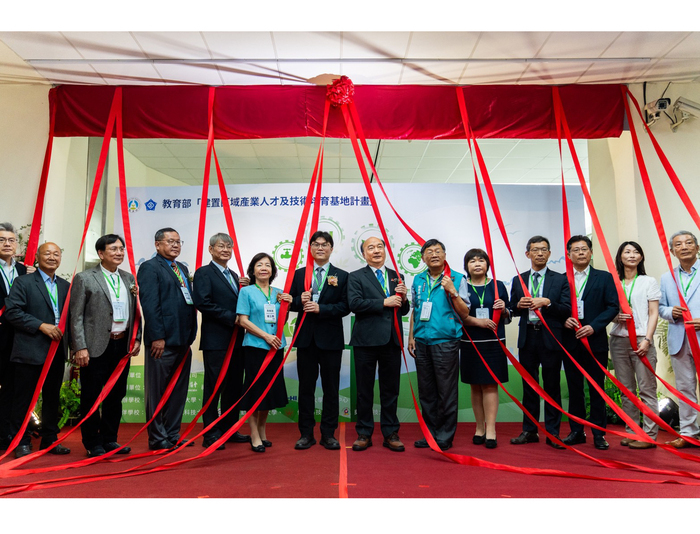
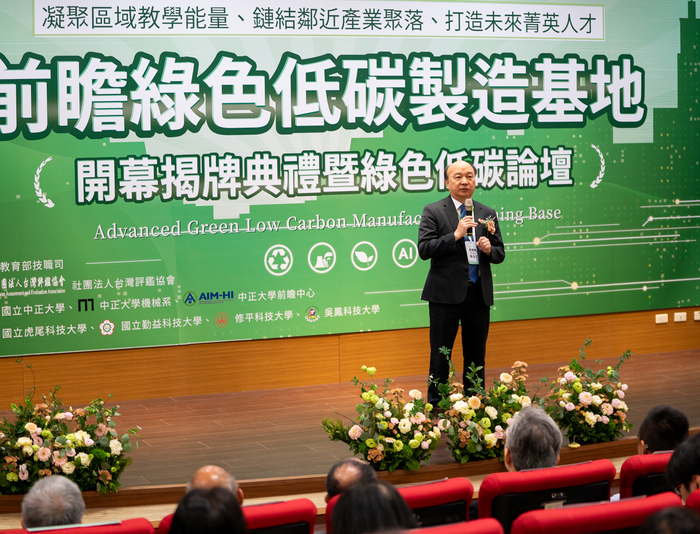
At a pivotal moment when the global manufacturing industry was shifting from "experience-based" to "data-driven" production, National Chung Cheng University (CCU) officially inaugurated its "Advanced Green and Low-Carbon Manufacturing Base" on April 17, with the support of the Ministry of Education. Building upon 30 years of expertise in gear precision technology, CCU integrated AI and low-carbon technologies to establish this base, aiming to reshape the core competitiveness of Taiwan's precision machinery industry for the next 30 years.
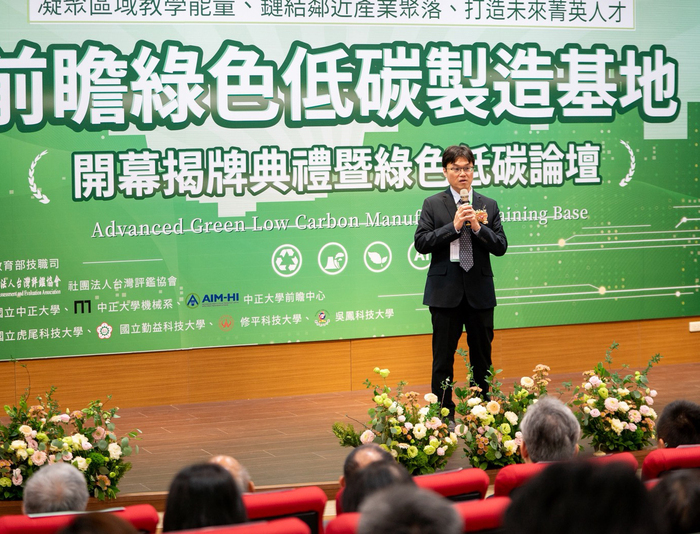
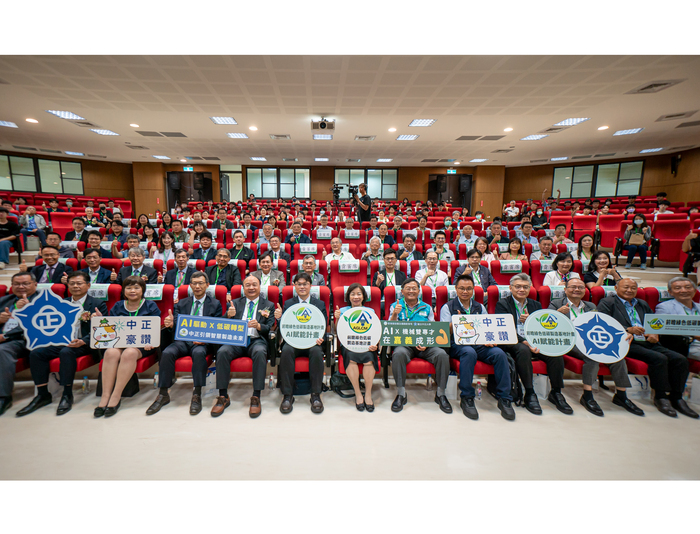
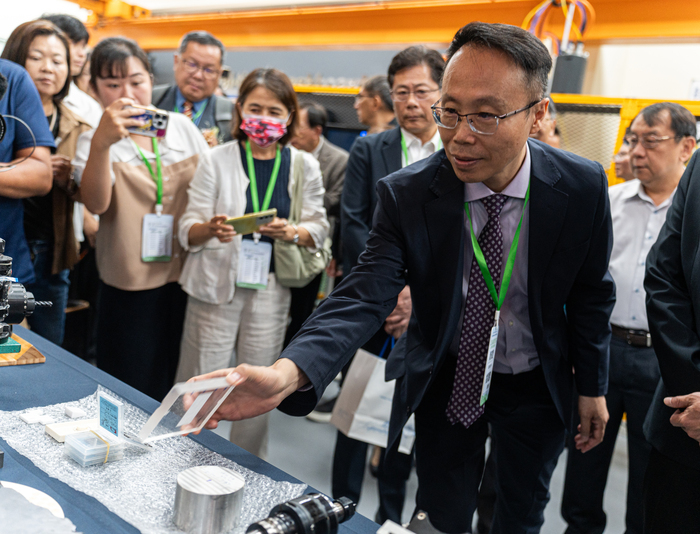
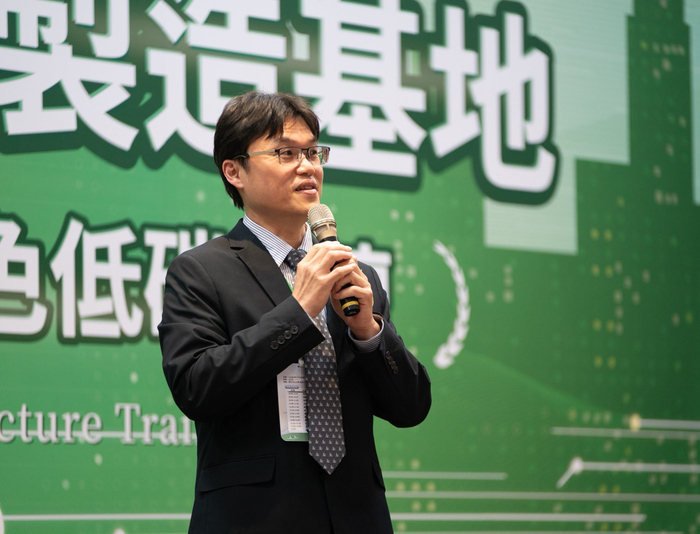
The inauguration ceremony was witnessed by guests including Chu Chun-chang, Deputy Minister of Education; Yang Yu-hui, Director of the Department of Technological and Vocational Education; Liu Pei-tung, Deputy Magistrate of Chiayi County; and industry representatives, including Lin Chien-yu, Chairman of the Machinery Industry Talent Cultivation Promotion Committee of the Taiwan Association of Machinery Industry and Director of the Taiwan Machine Tool & Accessory Builders' Association. Representatives from Jielongxing Gear Co., Ltd., the Industrial Technology Research Institute (ITRI), and the Precision Machinery Research and Development Center (PMC) also attended. Four partner universities—National Formosa University, National Chin-Yi University of Technology, WuFeng University, and Hsiuping University of Science and Technology—also participated, showcasing the outcomes of inter-university and industrial collaboration. The low-carbon forum held in the afternoon focused on how smart transformation could drive Taiwan's manufacturing industry toward the 2050 Net-Zero goal.
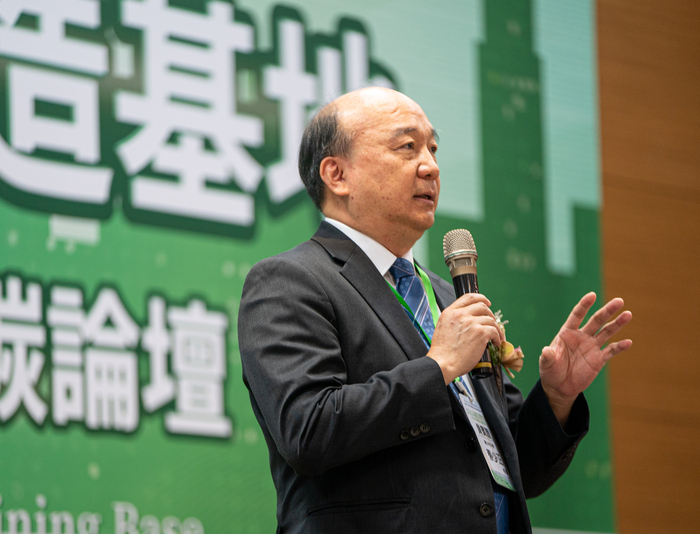
Deputy Minister of Education Chu Chun-chang stated that the establishment of this base represented not only the core elements of Taiwan's future industrial development but also a significant milestone in achieving the national "2050 Net-Zero" goal. He expressed his hope that the university would serve as a bridge between academia and industry, and deepen local industrial connections. Chiayi County Deputy Magistrate Liu Pei-tung noted that Chiayi County was transforming from an agricultural hub into a center for agriculture, industry, and technology. In addition to the existing Asia UAV AI Innovation Application R&D Center, the establishment of this new base further reinforced the momentum for local industrial upgrading and technological development.
CCU President Shaw-Jenq Tsai remarked, "In the past, the manufacturing industry relied on master craftsmen's ears and hands. Today, through AI, we can inherit this wisdom, systematize and standardize technology via data and algorithms, and enhance overall industrial competitiveness."
The core of the base was the dual-track integration of "AI × Low-Carbon." The CCU mechanical engineering team converted years of industrial expertise into "calculable, predictable, and optimizable" digital assets. Within the base, five-axis machining centers were equipped with "Smart Tool Holders" and "Physics-Informed AI Models," allowing machines to sense cutting forces and vibrations in real-time, enabling "proactive prediction" rather than "post-process correction."
This green revolution moved beyond laboratory theory. In tests with major manufacturers such as Fair Friend Group, Goodway Machine, Mien-Ying Precision, and San Long Gear, the CCU team demonstrated remarkable results: processing efficiency increased nearly sevenfold, while energy consumption was reduced sixfold. Through "Digital Twin" technology, gear manufacturing processes that previously required repeated trials and high energy consumption could now be completed with precision in a single setup.
Adopting a "regional linkage" strategy, CCU collaborated with four partner universities to cultivate "bilingual" engineers possessing both mechanical expertise and AI analytical capabilities. To date, the program has trained over 557 individuals, allowing students to step out of the classroom and participate in real-world industrial problem-solving.
President Shaw-Jenq Tsai stated that the technology system was evolving from traditional machine tools toward the semiconductor equipment supply chain. CCU would continue to deepen AI empowerment, low-carbon governance, and industry-academia co-creation, positioning Taiwan's manufacturing industry as a navigator for high-end smart manufacturing solutions. CCU remained committed to being a core node for regional innovation, supporting the nation's net-zero transition.