

“State Organs” Screened Again at National Chung Cheng University, Highlighting Allegations of Forced Organ Harvesting
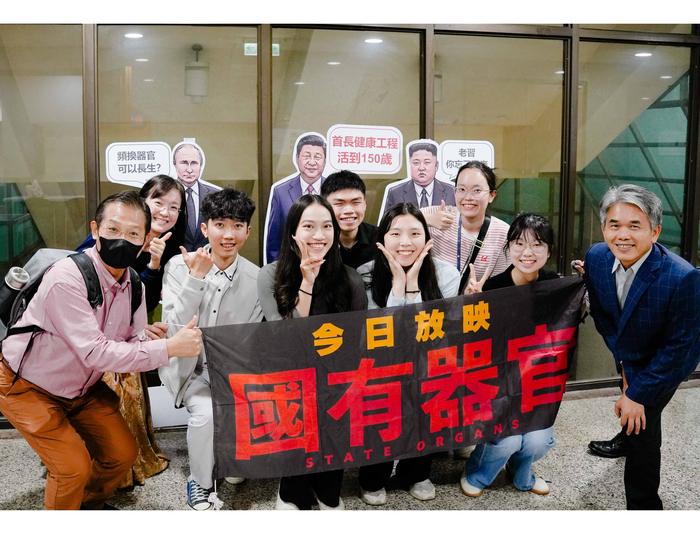
On the evening of March 5, the Falun Dafa Club at National Chung Cheng University held a second public screening of the documentary State Organs on campus. The film, which focused on allegations of forced organ harvesting in China, attracted nearly one hundred students. Following the screening, experts from the fields of law, medicine, and the film industry were invited to participate in a panel discussion with students to explore issues related to organ transplantation ethics and human rights, as well as broader concerns regarding human rights violations and transnational repression under authoritarian systems.
The documentary presented a range of data and indirect evidence, combining video footage, written records, and audio materials to document and examine the issue. It also included testimony from military medical personnel and findings from international investigations. Since its release in Taiwan in 2024, State Organs generated significant public discussion. According to the film’s distributor, several cinemas reportedly received anonymous threatening letters attempting to obstruct screenings during its theatrical run; consequently, some theaters hesitated to collaborate with the distributor. During the panel discussion, distributor representative Guan Jian-Zhong noted that more than 150 anonymous threatening letters had been received by that time.
The film featured interviews with investigators and witnesses, including a military doctor identified as “Zheng Zhi,” who stated that he witnessed an alleged organ harvesting operation in 1994. The documentary also followed the stories of two young individuals who disappeared under circumstances related to persecution in China. Through the decade-long search conducted by their families, the film gradually revealed possible connections to an underground organ transplant market. Rather than presenting a simple accusation, the documentary focused on tracing the broader institutional context behind these events.
After the screening, the organizers hosted a cross-disciplinary panel discussion. The invited speakers included former military court prosecutor Li Zheng-Xiong, Lion Films General Manager Guan Jian-Zhong, and Dr. Huang Shih-Wei, Director of the Department of Urology at National Taiwan University Hospital Yunlin Branch. From the perspectives of law, media communication, and medical ethics, the panelists discussed the ethical boundaries and human rights implications surrounding the issue of organ harvesting.
Many students shared their reflections after the event. One economics student commented, “I cannot imagine what it would be like if something like this happened to me.” Others said they were shocked by the information presented, noting that it was their first time learning about many of these issues and that the documentary prompted them to think more deeply about related human rights concerns.
Due to the enthusiastic response and attendance exceeding expectations, the organizers announced plans to hold another public screening in May. They hoped to invite more faculty and students to watch State Organs, a documentary that raised important questions about human dignity and medical ethics.