

CCU Workshop Traces the Chinese Classics Across BordersKeynote speakers from Vietnam, Japan, Italy, and Taiwan explored rare books, the stars, and ritual traditions
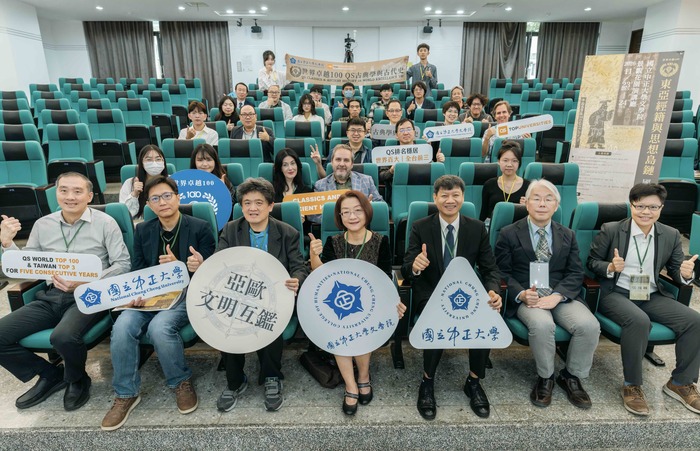
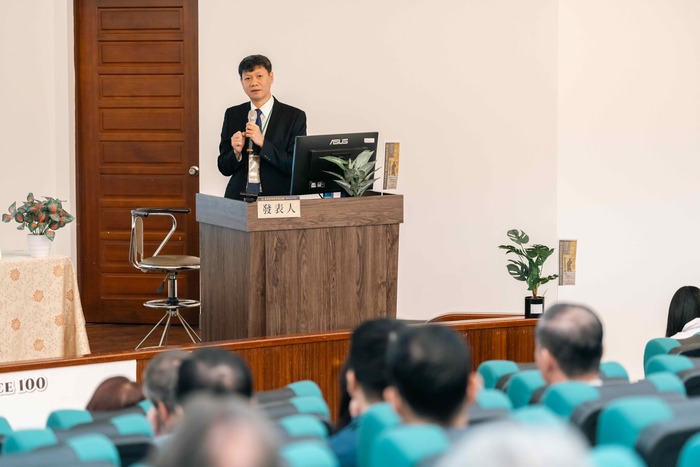
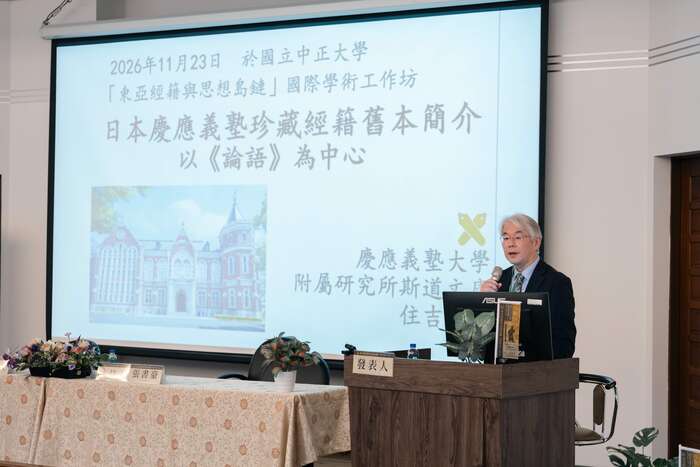
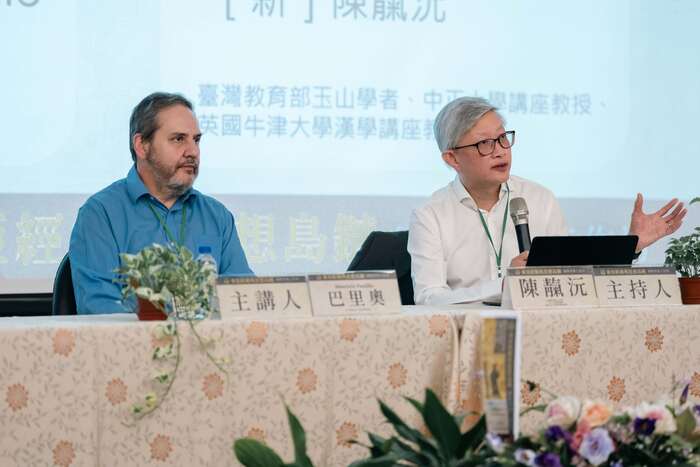
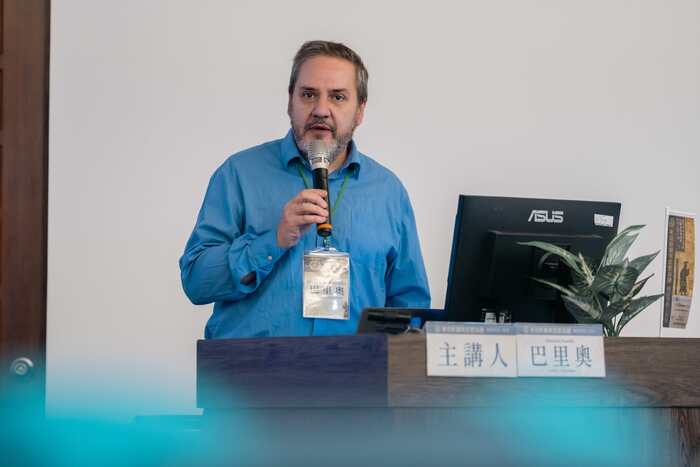
On November 23 and 24, 2026, the College of Humanities at National Chung Cheng University (CCU) hosted the international workshop “East Asian Classics and Island Chains of Thought.” Two opening-day keynotes approached the Analects of Confucius from different angles. Tài Đông Nguyễn, head of the Department of Scientific Management and International Cooperation at the Vietnam Academy of Social Sciences, examined how Nguyễn Du Phạm, a Confucian scholar of Vietnam’s Lê dynasty, responded to Xi Zhu’s reading of the Analects in his own commentary. Tomohiko Sumiyoshi, a professor at the Keio Institute of Oriental Classics in Japan, drew on the history of editions and book collecting to introduce rare copies of the classics held at Keio University.
On the second day, Maurizio Paolillo, professor of Chinese studies at the University of Naples “L’Orientale” in Italy, spoke on “The Old Man Star in Astronomical, Cosmological, and Daoist Sources.” He traced how ancient observers studied the star known as Canopus and how it acquired religious significance in Daoist texts. Tian Yuan Tan, Shaw Professor of Chinese at the University of Oxford and chair professor at CCU, introduced the speaker and chaired the session.
Yueh-hui Lin, a research fellow at Academia Sinica’s Institute of Chinese Literature and Philosophy, examined the Joseon scholar Yak-yong Jeong’s study of the rites for offering sacrifices to Heaven in his Chunchu gojing (An Evidential Study of the Spring and Autumn Annals). Lin showed how Jeong’s account of these rites illuminated his understanding of the Supreme Lord, Shangdi. Michiaki Fujii, associate professor in the Faculty of Humanities at Kyushu University in Japan, traced how the school of Ansai Yamazaki interpreted the song “Juyou Cao” (“Song of Confinement”). He explored how Zhu’s teachings on the relationship between ruler and minister helped shape the idea in Japan that loyalty and filial piety are one.
The workshop brought together scholars from seven countries and regions: Taiwan, Japan, Vietnam, Malaysia, Singapore, the United States, and Italy. In addition to the five keynotes, participants presented 15 papers. Topics included Buddhist stele inscriptions in 17th-century Vietnam, the influence of texts produced through spirit writing in China’s Xiantiandao tradition on new religious movements in Vietnam, and the translation of the Daoist classic Daodejing into Indonesian under Dutch colonial rule.
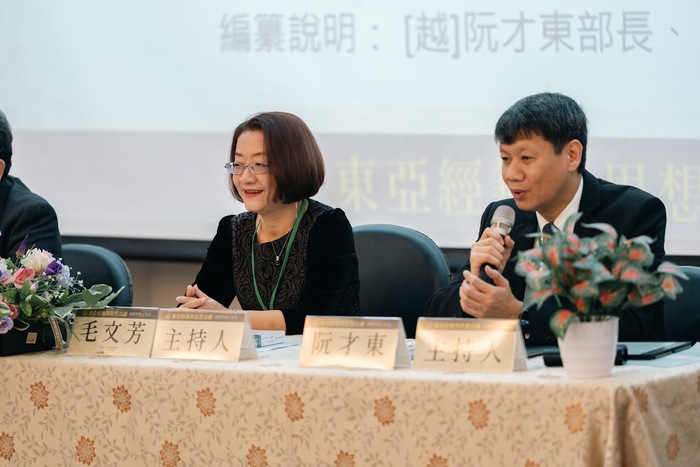
At the opening session, Wen-Fang Mao, dean of CCU’s College of Humanities and the workshop convener, joined Tài Đông Nguyễn to recount how their new book, Sinitic Texts in East Asia and Vietnamese Thought, came about. Tài Đông Nguyễn, Tô Lan Nguyễn, and Mao co-edited the volume, which was slated for publication in Taiwan.
Between December 2025 and November 2026, CCU’s College of Humanities organized seven international academic conferences on different themes. Earlier in November 2026, the college and the National Palace Museum co-hosted the international conference “Mountains, Seas, and Island Chains: The Eurasian Silk Roads.” The workshop turned to intellectual exchange across East and Southeast Asia, tracing how readers collected, interpreted, and translated the classics. Through humanities research that spans regions and civilizations, the college aims to provide scholars with an international forum grounded in Taiwan and informed by a wider East Asian perspective.