

Will Mountain Wildfires Increase in Taiwan Amid Future Heatwaves? CCU Study Revealed Key Regulating Role of Cloud Forests
As Europe suffered from severe heatwaves this year that triggered out-of-control wildfires and caused heavy economic losses, Taiwan had also frequently experienced extreme high temperatures in recent years, with lowland peaks often approaching or breaking 39 to 40°C. Will Taiwan face similar uncontrollable wildfire events in the future? Past paleoenvironmental records can help us understand tomorrow's world. The Holocene Thermal Maximum was the warmest period of the past 10,000-plus years, with temperatures roughly 1–2°C higher than preindustrial levels. Reconstructing the paleoenvironment of that era provided a valuable analog for present and future warming scenarios.
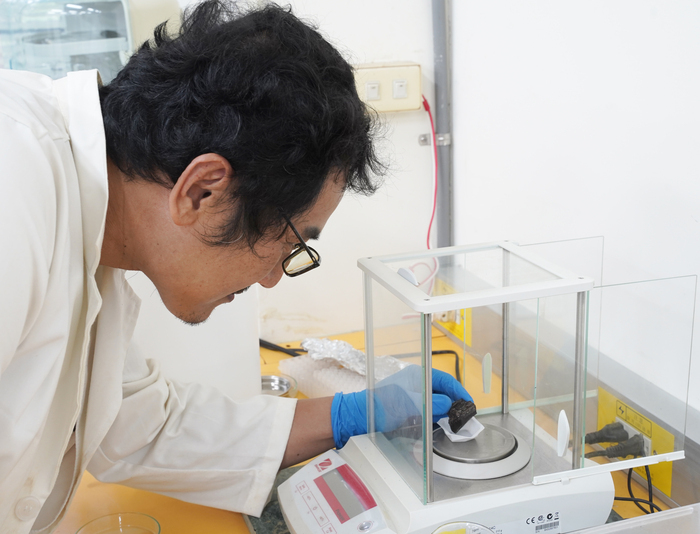
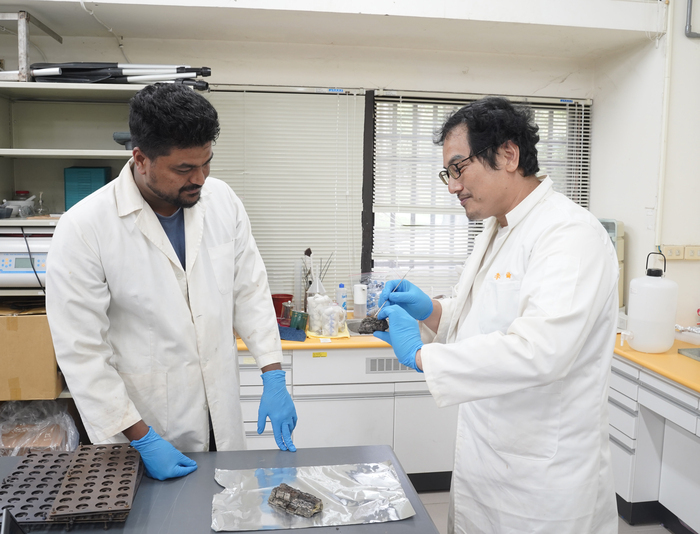
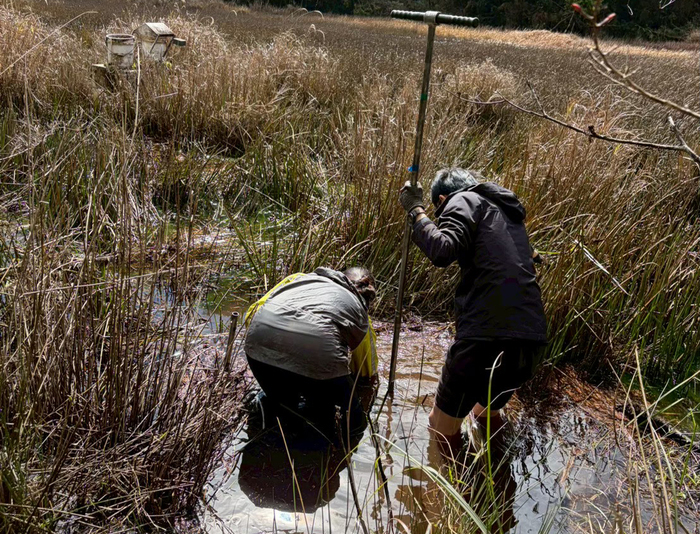
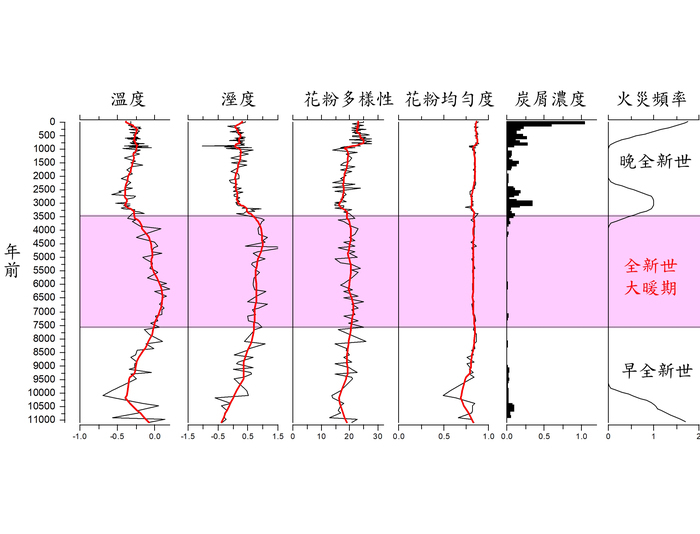
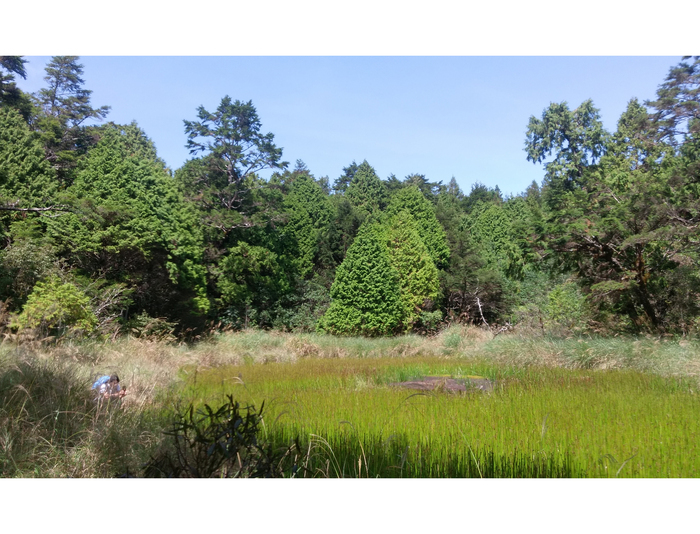
To address whether future wildfires will increase, a research team from the Department of Earth and Environmental Sciences at National Chung Cheng University (CCU) analyzed pollen and charcoal records within sediment cores from San-Hsing-Mei Pond near Cueifong Lake in Yilan, reconstructing a 10,000-year history of northern Taiwan's forest and wildfire dynamics. Surprisingly, the results revealed that wildfire frequency was at its lowest during the hottest Holocene Thermal Maximum. Because San-Hsing-Mei Pond is situated within the cloud forest zone, the cloud belt acted as a natural "moisturizing system" for the forest during this scorching period, suppressing the occurrence of mountain wildfires.
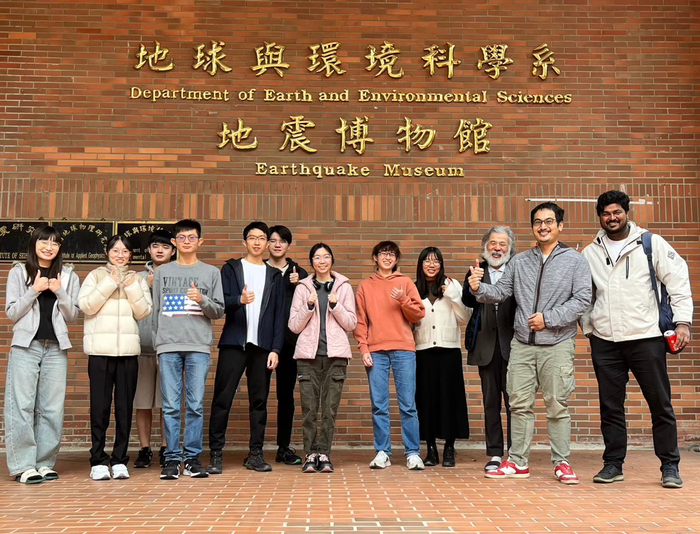
Professor Liang-Chi Wang from CCU's Department of Earth and Environmental Sciences explained that Taiwan's cloud forest zone is primarily distributed between altitudes of 700 and 2,500 meters, where orographic lift causes moisture to condense, creating a long-term, high-humidity environment. When fog frequently blankets the mountains, the forest understory retains high humidity, lowering the probability of wildfire initiation and spread. However, recent meteorological studies indicate that as warming intensifies, the cloud belt may shrink or shift upward. When the rate of temperature rise outpaces moisture replenishment, cloud belts originally at lower elevations will gradually vanish and migrate to higher altitudes. The records from San-Hsing-Mei Pond demonstrated that within a 1–2°C temperature increase, cloud belts function as a protective shield to maintain humidity in mid-to-high altitude forests and reduce wildfire risks. Thus, if future warming exceeds this threshold and causes the cloud forest zone to disappear, wildfire frequencies across low-to-high elevation forests will rise substantially.
Furthermore, Professor Wang emphasized that whether a forest can recover after a fire depends not only on tree regeneration, but crucially on whether the microenvironment regains stability. If sufficient cloud fog and humidity remain postfire, the forest can more easily return to a diverse and stable state; conversely, if the environment remains dry or suffers human disturbance, it may linger in an open, highly flammable state, further elevating future fire risks. For Taiwan, the San-Hsing-Mei Pond wetland preserves a precious 10,000-year environmental archive; even minor shifts in cloud cover and humidity can trigger a domino effect across forest composition, plant diversity, wildfire risks, and recovery speed. This research achievement was published in Global and Planetary Change, a premier international journal in earth sciences and environmental change.