

CCU–NCYU EMI Co-learning Community Earns Dual Recognition for Excellence
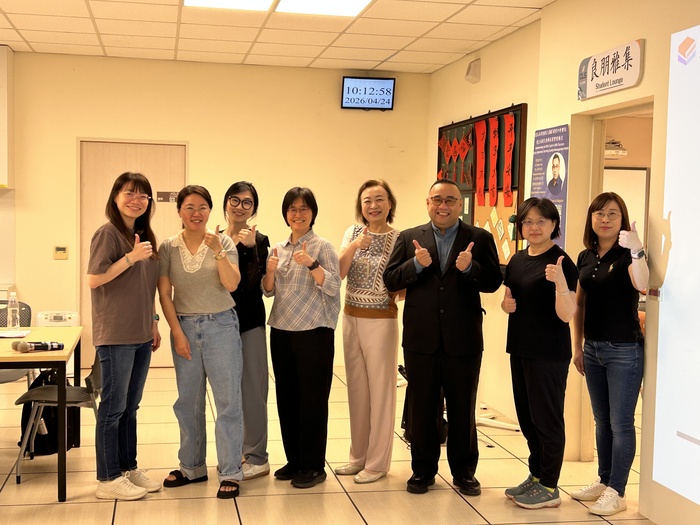
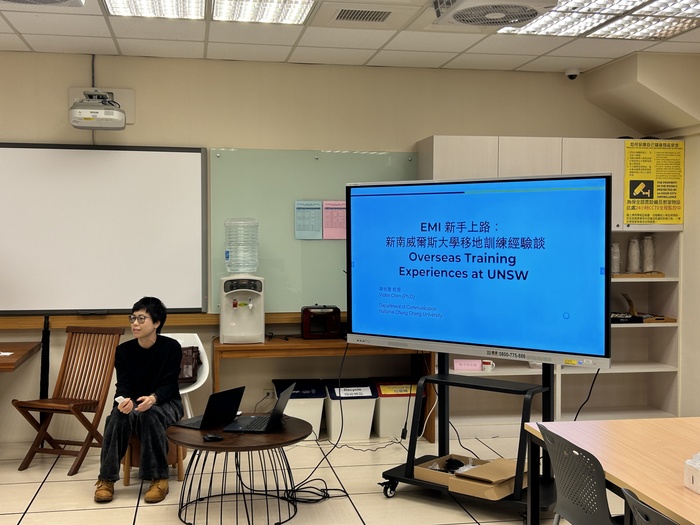
A cross-university English-medium instruction (EMI) co-learning community jointly formed by National Chung Cheng University (CCU) and National Chiayi University (NCYU) earned recognition for excellence from both Taiwan’s Southern and Central Bilingual Education Resource Centers, highlighting the impact of needs-based faculty development and cross-disciplinary collaboration.
The community was co-led by Wen-Chun Chen, Director of the Center for Language Studies, Hui-Tzu Hsu, and Wen-Li Chang. Rather than adopting a one-size-fits-all model, the team developed two complementary professional development pathways tailored to community members’ diverse teaching requirements.
The first pathway strengthened collaboration between content and language instructors. Through joint lesson planning, classroom observations, and professional dialogue, content teachers identified the academic language and communication skills students required in EMI courses. Concurrently, language instructors gained a deeper understanding of how various disciplines utilize language for reading, argumentation, problem-solving, and professional communication.
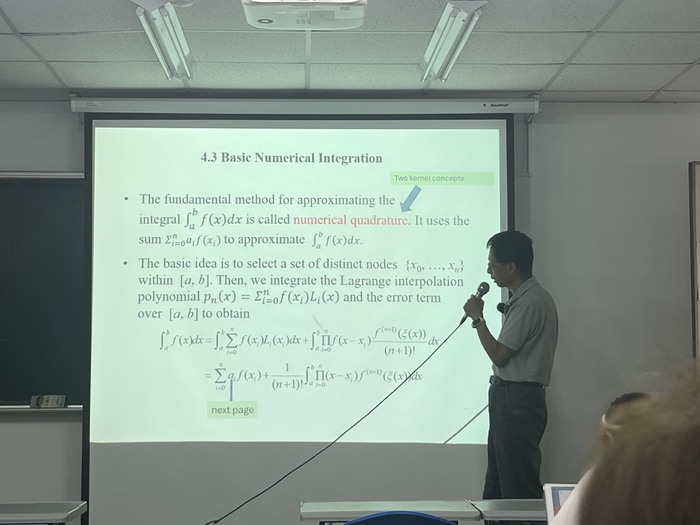
The second pathway extended from instructional practice to student learning outcomes and systematic quality assurance. As part of an initiative led by National Chung Hsing University, Chi-Wen Hsieh’s Numerical Methods and Applications course in the Department of Electrical Engineering served as a case study to develop an EMI course quality assurance rubric. The team utilized classroom observations, post-observation discussions, assessments, and student learning evidence to systematically evaluate course design and learning achievements.
The community brought together faculty from foreign languages and literature, law, electrical engineering, psychology, mathematics, business administration, and language education. Although each discipline presented distinct teaching tasks and language demands, members shared a unified framework encompassing needs analysis, instructional design, observation, evidence collection, reflection, and continuous improvement.
By integrating these pathways within a single inter-university initiative, the community empowered members to adapt effective practices while honoring the unique needs of each discipline.
The community welcomed interested faculty for the new semester. For further information, please contact the Center for Language Studies.