

Taiwan Digital Bio-Medicine EMI League Holds Fourth Two-Day In-Person Exchange Event
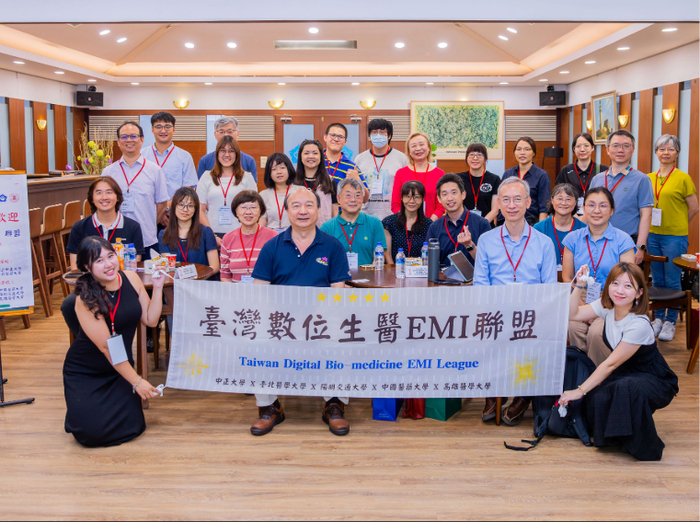
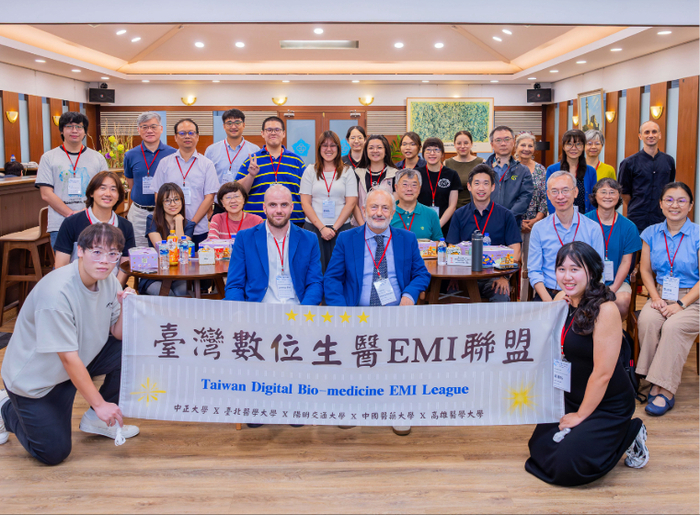
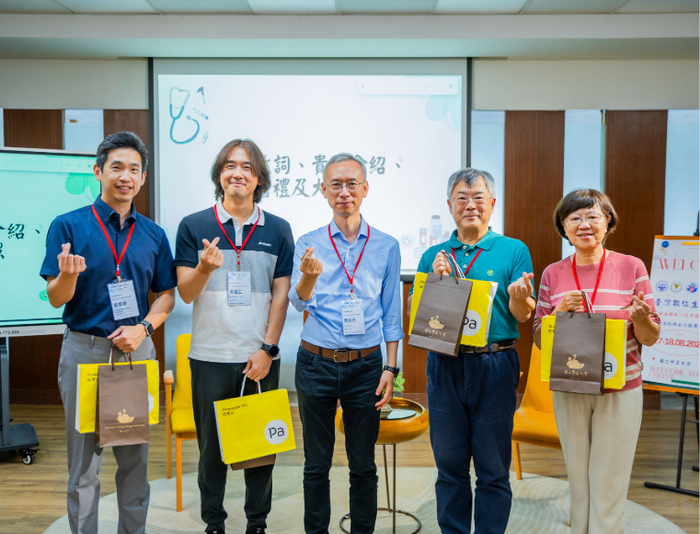
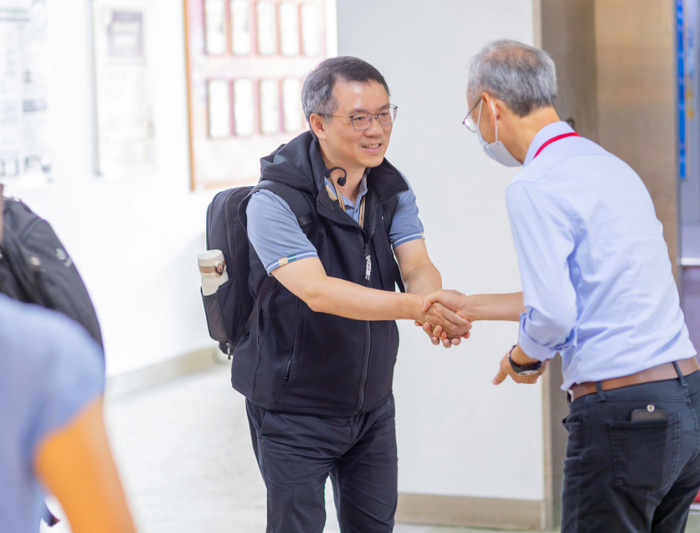
The Taiwan Digital Bio-Medicine EMI League held its fourth two-day in-person exchange event from August 17 to 18, bringing together faculty members and administrative representatives from participating universities to share experiences, teaching practices, and innovative approaches to English as a Medium of Instruction (EMI).
Co-hosted by National Chung Cheng University (CCU) and Taipei Medical University (TMU), the event brought together representatives from CCU, TMU, National Yang Ming Chiao Tung University (NYCU), and China Medical University (CMU). Through institutional presentations, international lectures, group discussions, and cultural exchange activities, the event provided a valuable platform for faculty members to strengthen professional connections and explore opportunities for future collaboration.
Established to promote EMI development in the field of digital biomedicine, the Taiwan Digital Bio-Medicine EMI League is committed to building a sustainable cross-institutional community for EMI educators. Through regular exchanges and collaborative activities, the League facilitates the sharing of teaching resources and experiences while encouraging faculty members to explore effective strategies for EMI course design, classroom instruction, and student learning support.
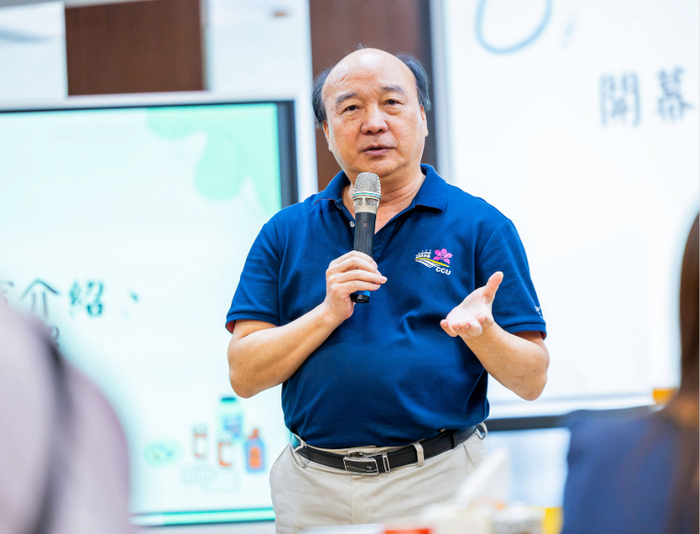
The first day of the event was held at National Chung Cheng University. The program opened with welcoming remarks by President Shaw-Jenq Tsai of National Chung Cheng University, who expressed his appreciation to the participating universities and faculty members for their continued commitment to bilingual education and EMI development. He also emphasized the importance of inter-university collaboration in creating a more internationalized higher education environment in Taiwan.
Following the opening ceremony, representatives from the participating universities shared their recent experiences and achievements in promoting EMI. The presentations covered a range of topics, including curriculum development, teaching strategies, faculty support, student learning, and institutional initiatives. The exchange allowed participants to gain insights into different approaches to EMI implementation and identify common challenges and potential solutions.
Two distinguished speakers from the University of Florence, Italy, Professor Edgardo Giordani and Dr. Lorenzo Bini, a postdoctoral researcher, were also invited to deliver a special lecture on EMI education, providing participants with an international perspective on the development of English-medium instruction. Through practical examples and teaching experiences, the session encouraged faculty members to consider how language support, classroom interaction, and instructional strategies can be effectively integrated into professional courses while maintaining the quality of disciplinary learning.
The afternoon session featured cross-institutional group discussions. Faculty members from different universities and academic backgrounds exchanged ideas on practical challenges encountered in EMI classrooms, including differences in students’ English proficiency, classroom participation, teaching materials, faculty language use, and the balance between disciplinary content and English-language learning.
The discussions provided an opportunity for participants to share practical solutions and teaching experiences, while also strengthening connections among EMI educators across institutions. Through face-to-face interaction and peer exchange, participants developed a deeper understanding of the diverse approaches to EMI implementation adopted by different universities.
The second day of the event featured an educational and cultural exchange program, allowing participants to continue networking and strengthen relationships beyond the formal academic sessions. The two-day event not only facilitated professional exchange but also fostered a stronger sense of community among faculty members participating in the Taiwan Digital Bio-Medicine EMI League.
National Chung Cheng University emphasized that EMI goes beyond simply delivering courses in English. Effective EMI education requires an appropriate learning environment and teaching strategies that enable students to develop both disciplinary expertise and English communication skills. In the biomedical field, where international collaboration and interdisciplinary knowledge are increasingly important, cross-institutional cooperation and faculty communities play a vital role in continuously improving EMI teaching quality.
The successful conclusion of the fourth Taiwan Digital Bio-Medicine EMI League in-person exchange event marked another important milestone in the League’s ongoing development. Looking ahead, the League will continue to promote faculty professional development, facilitate the exchange of EMI teaching practices and resources, and explore new opportunities for cross-institutional collaboration.
Through sustained cooperation among universities, the Taiwan Digital Bio-Medicine EMI League aims to build a stronger and more internationalized EMI education ecosystem in Taiwan and to cultivate a new generation of biomedical professionals equipped with disciplinary expertise, English communication skills, and global perspectives.