

Promoting Transitional Justice in Yunlin, Chiayi, and Tainan: CCU USR Office and Taoshan Humanity and Arts Institute Jointly Hosted the 2026 Student Autonomy and Transitional Justice Workshop
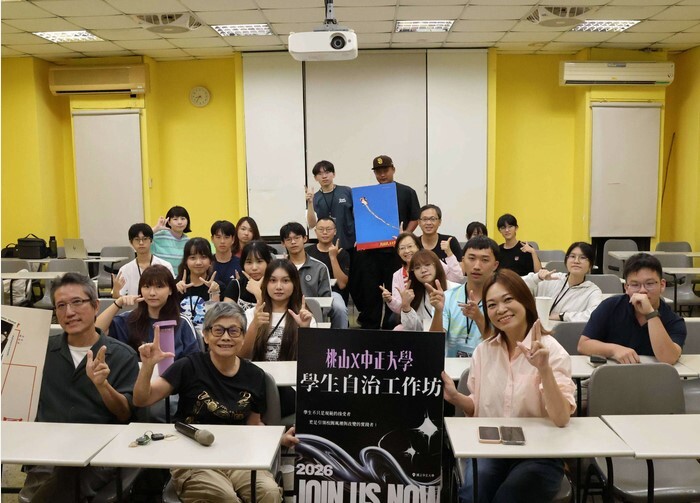
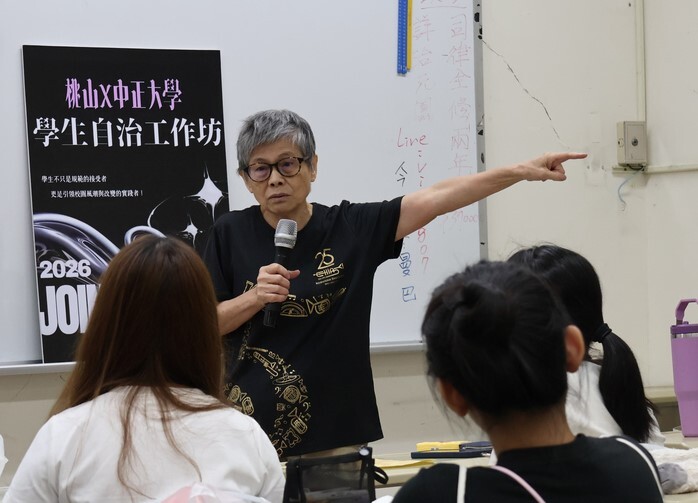
The University Social Responsibility (USR) Office at National Chung Cheng University (CCU) built a transitional justice network in the Yunlin, Chiayi, and Tainan regions to advance human rights education by connecting local communities, historical and cultural workers, and educational institutions. On August 15–16, the CCU USR Office and the Happy Citizens Academy of the Taoshan Humanity and Arts Institute in Chiayi City jointly held the "2026 CCU x Taoshan Student Autonomy and Transitional Justice Workshop." In addition to CCU students, the event drew participation from local high school students and community partners. Through historical understanding and human rights education, the workshop aimed to encourage participants to reflect from a transitional justice perspective on how structural limitations—such as students being excluded from campus decision-making—were formed and sustained in the past. At the same time, it urged participants to cultivate human rights awareness from every corner of campus to jointly safeguard Taiwan's hard-won democratic achievements.
The CCU USR Office stated that the workshop aimed to root transitional justice education in the younger generation. By using films and historical analysis to deepen participants' understanding of transitional justice, the event sought to transform it from an abstract textbook term into practical action plans, inviting everyone to broaden the impact of transitional justice starting with themselves.
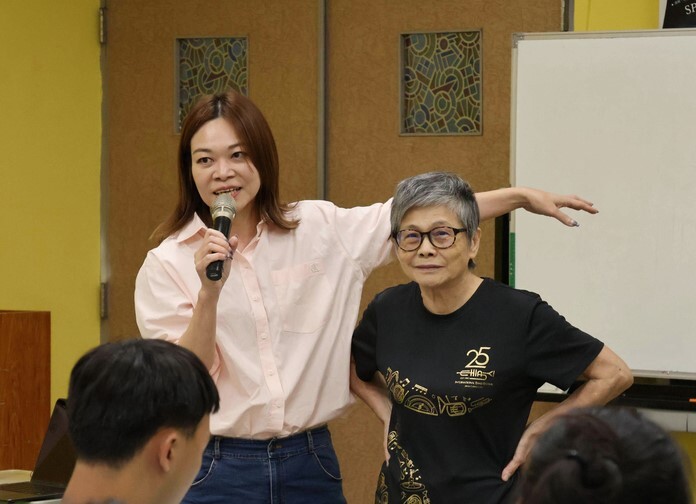
Lin Jui-hsia, Director of the Taoshan Humanity and Arts Institute in Chiayi City, expressed hope that the workshop would help participants understand the far-reaching impact of authoritarian rule on society and schools while teaching them how to practice civic action in campus life. She suggested that students could turn transitional justice into a part of daily campus life by hosting lectures, launching campus de-authoritarianization movements, or organizing commemorative ceremonies.
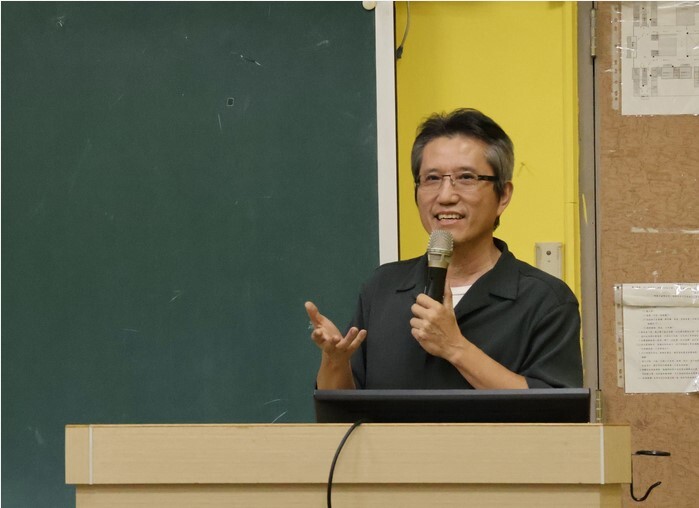
A highlight of the workshop was the screening of The Wind, a documentary directed by Kevin H. J. Lee that tells the life story of Peter Huang (Huang Wen-hsiung), the key figure in the 1970 assassination attempt on Chiang Ching-kuo in New York. Associate Professor Tsai Tsung-lung from CCU's Department of Communication led the post-screening discussion. Associate Professor Tsai pointed out that the student rights and democratic environment enjoyed on campuses today did not appear out of thin air but are the result of human rights awareness spreading over time from state institutions into all corners of society. He highlighted how Peter Huang introduced international human rights covenants and concepts to Taiwan, pushing the government to implement institutional safeguards that allowed the spirit of democracy and human rights to take root.
Addressing the film's title and visual metaphors, Associate Professor Tsai explained that the "kite" symbolizes the fine yet resilient emotional thread connecting Huang to his homeland and family during his decades in exile overseas. He used this metaphor to encourage the attending students to protect today's democracy by understanding history. Professor Chang I-pin, President of the Central Taiwan Professors Association—a co-organizer of the event—also attended the screening. Offering a scientific perspective, Professor Chang noted that the visual of a "tailless kite"—which is exceptionally difficult to control—profoundly illustrates Peter Huang's journey through adversity and hardship throughout his life.
Looking ahead, the CCU USR Office will continue to deepen partnerships with local organizations, integrating transitional justice into campus and community curricula. By fostering everyday dialogue around these values, the initiative aims to nurture citizens equipped with human rights awareness, historical critical thinking, and social concern.