

Building an AI Governance Talent Platform: 16 Universities Jointly Promote AI Auditing Education
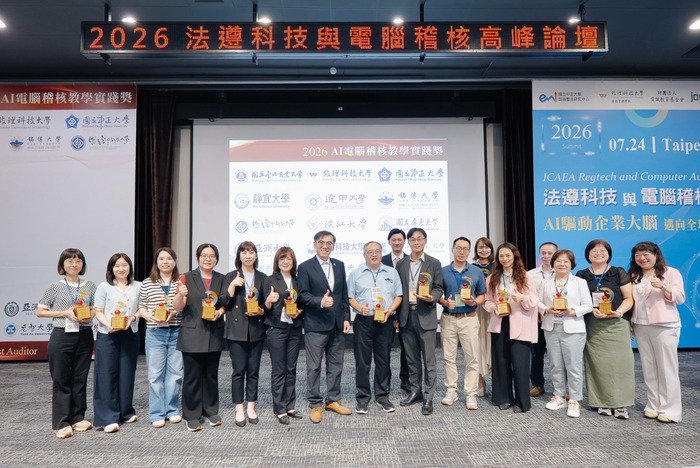
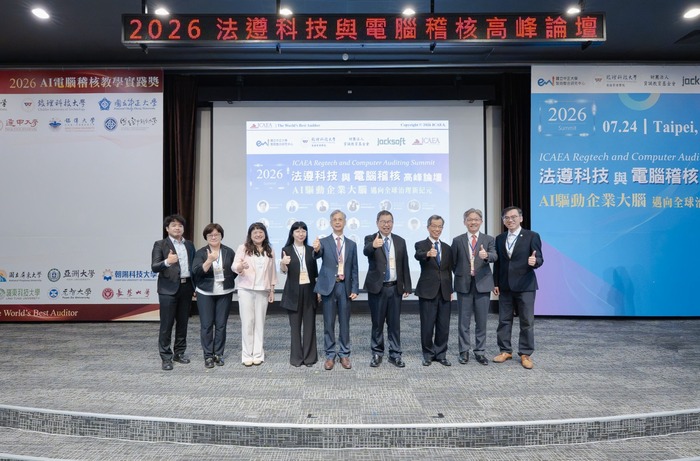
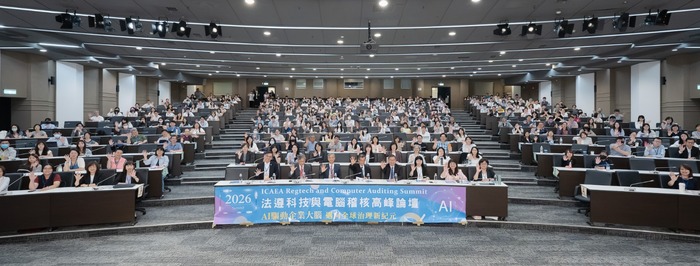
In response to the rapid transformation of industries and governance driven by generative artificial intelligence (AI), the Center for E-manufacturing and E-commerce at National Chung Cheng University, the College of Business Management at Chihlee University of Technology, the International Computer Auditing Education Association (ICAEA), JACKSOFT, and the PwC Education Foundation jointly hosted the 2026 ICAEA Summit on Regulatory Technology and Computer Auditing on July 24 at the GIS NTU Convention Center in Taipei.
Under the theme "AI-Driven Enterprise Intelligence: Advancing into a New Era of Global Governance," the summit attracted more than 400 participants from government agencies, corporations, financial institutions, accounting firms, and universities across Taiwan.
The summit brought together distinguished experts from Taiwan, the United States, Japan, and Germany to discuss the latest developments in generative AI, AI governance, cybersecurity resilience, intelligent auditing, regulatory technology (RegTech), ESG governance, and enterprise risk management, providing an international platform for professional exchange and interdisciplinary collaboration.
One of the highlights of the event was the keynote address delivered by Yulia Gurman, Global Board Director (Professional Standards) of The Institute of Internal Auditors (IIA Global). In her presentation, "State of the Profession: Building Trust in the Age of AI Acceleration," she shared insights into how artificial intelligence is reshaping the internal audit profession under the latest Global Internal Audit Standards, emphasizing the emerging competencies and professional capabilities required for future auditors.
The summit also featured Dr. Fu-Longe Tsai, Director General of the Administration for Cyber Security, Ministry of Digital Affairs (Taiwan), who presented "AI-Driven Transformation in Cybersecurity," outlining Taiwan's latest policy initiatives on AI and cybersecurity governance. In addition, Jin-Ruei Chang, Chairman of PwC Intelligent Risk Management Consulting Co., Ltd., delivered a keynote entitled "Corporate Governance in the AI Era: From Agency Risks to Competitive Moats," exploring how organizations can leverage AI governance to strengthen competitiveness and create sustainable strategic advantages.
Professor Shi-Ming Huang, Director of the Center for E-manufacturing and E-commerce at National Chung Cheng University, remarked that university education in the AI era should go beyond teaching students how to use AI tools. Instead, institutions should cultivate interdisciplinary competencies in AI governance, data analytics, risk management, internal control, and regulatory compliance, preparing globally competitive professionals capable of leading future governance transformation.
Professor Fen-Mei Liu, Dean of the College of Business Management at Chihlee University of Technology, emphasized that future AI professionals must possess both technological expertise and business management capabilities. Through international forums, industry-academia collaboration, and professional certification programs, students can better align with global trends, bridge the gap between academic learning and industry practice, and enhance their career competitiveness.
During the summit, the ICAEA International Certification Excellence Award Ceremony was held to recognize outstanding candidates who achieved exceptional performance in the AI Computer Auditing and Data Analytics International Certification examinations. In addition, 16 universities across Taiwan were honored for their long-term commitment to advancing education in AI governance, computer auditing, and regulatory technology, acknowledging their significant contributions to cultivating digital governance and AI auditing talent.
Hsiu-Feng Huang, President of the ICAEA Taiwan Chapter, noted that talent is the most critical competitive advantage in the AI era. ICAEA has long been dedicated to promoting international professional certification in computer auditing and remains committed to developing professionals equipped with expertise in AI applications, data analytics, risk management, and regulatory compliance through internationally recognized standards, professional education, and certification programs.
The organizers concluded that the summit not only served as an important international forum for academic and professional exchange but also demonstrated Taiwan's achievements in AI governance education, international collaboration, and professional talent development. Moving forward, they will continue strengthening partnerships with international organizations and industry leaders to establish Taiwan as one of Asia's leading hubs for AI governance education and talent cultivation.