

First Chiayi Intergenerational Dragon Boat Race: Senior Class Wins Second Place
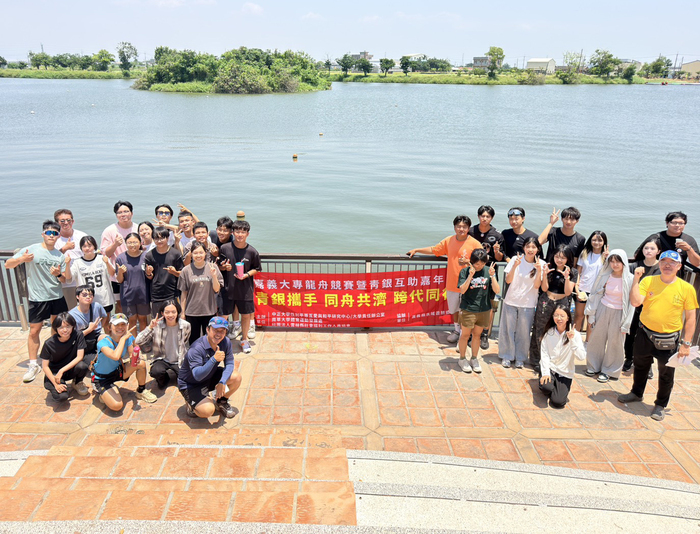
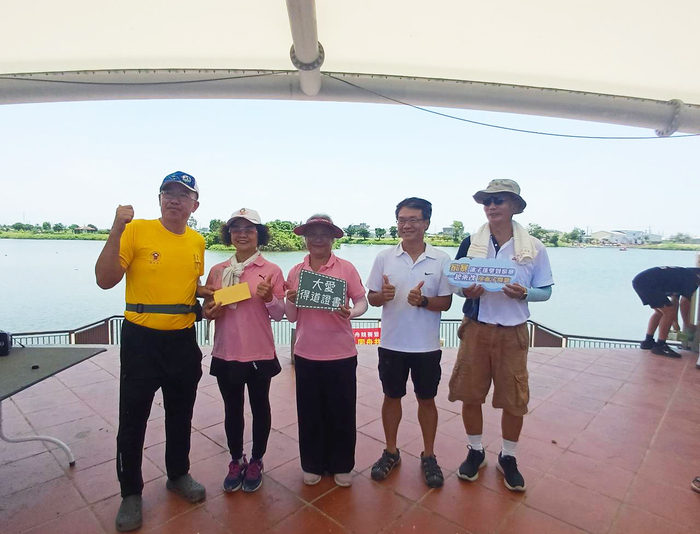
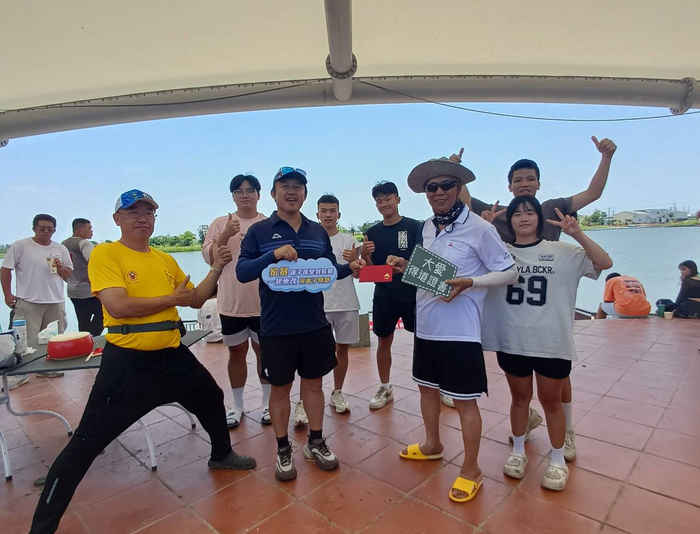
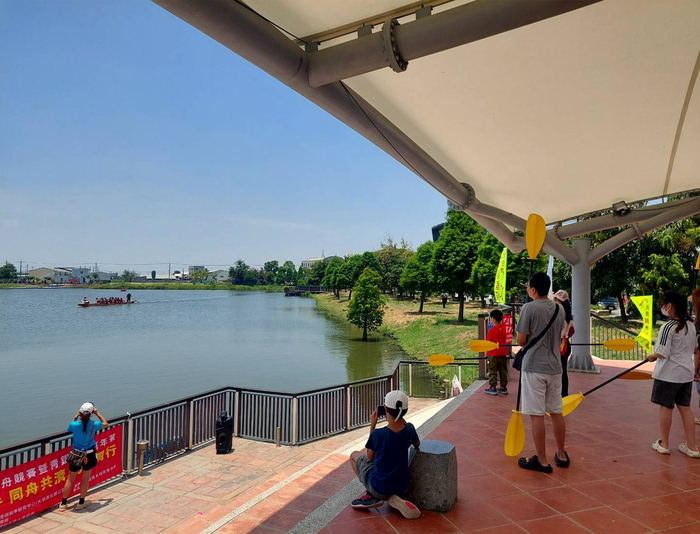
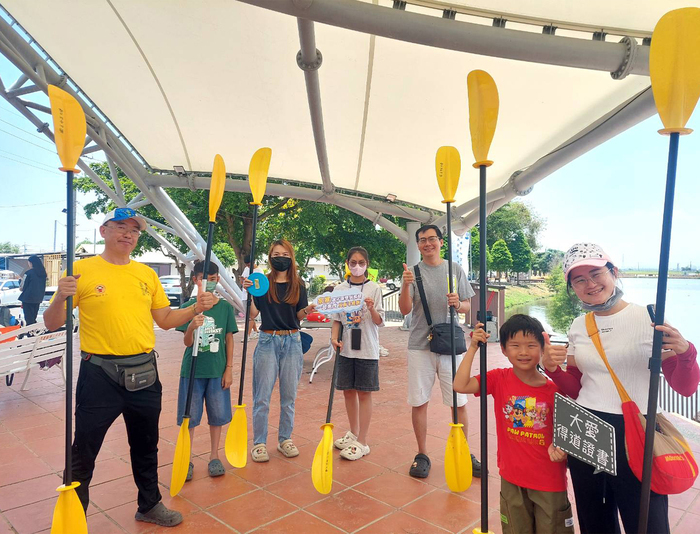
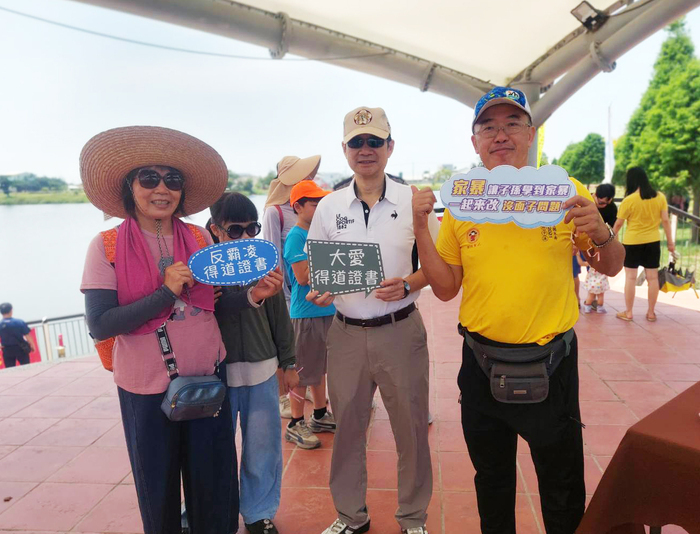
The inaugural Chiayi College Intergenerational Mutual Support Dragon Boat Race, jointly organized by Nanhua University and National Chung Cheng University, took place on Sunday at Yuet Lake in Datan, Xingang. Unlike traditional dragon boat competitions, this unique event prioritized intergenerational cooperation over raw speed.
The event was co-organized by Nanhua University’s Office of Physical Education and Sports Development, National Chung Cheng University’s Student Life Guidance Division, and the Center for Gender Equality, Mutual Love and Peace, alongside National Chung Cheng University’s senior learning class and the Chiayi Elderly Education Association.
Many senior participants found the activity deeply rewarding and expressed a keen interest in making it an annual tradition. Class Leader Liu of the senior learning class noted that when the older adults first heard about the race a month ago, they immediately rushed to register. They even committed to practicing daily from 7 a.m. to 9 a.m., demonstrating a level of diligence that rivaled or exceeded many university students. Their hard work paid off as the senior class went on to secure second place.
The competition featured four units: two teams from Nanhua University, one team from National Chung Cheng University, and one senior class team from National Chung Cheng University. The race utilized a single dragon boat, with each team timed separately. Nanhua University Team B clinched the championship with an impressive time of 1 minute and 14 seconds, while the senior class closely followed in second place at 1 minute and 19 seconds. Nanhua University Team A and the National Chung Cheng University team finished third and fourth, clocking in at 1 minute and 30 seconds and 1 minute and 45 seconds, respectively. In the intergenerational cooperation segment, the Nanhua senior-student team defeated the Chung Cheng senior-student team with a score of 1 minute and 30 seconds to 1 minute and 42 seconds.
Centered on the values of mutual love, mutual benefit, and cooperation, the event was designed to counter the growing individualism of modern society. By bringing together university students and community elders, the race forged cross-generational bonds of mutual support, demonstrated a spirit of universal care, and strengthened solidarity between younger and older generations.
The event also featured a “Great Love Canoe” activity tailored for three-generation families, attracting four extended families and more than 20 households. Participants completed various activity stations, including rowing, a communication frisbee game, heritage site learning, and a “great love choice” challenge, receiving family gift vouchers upon completion.
During the gathering, participants were posed a reflective question: “Which is more important—respecting oneself or respecting others? Or are they equally important? Why?” Most answered, “They are equally important, because every person matters.” The same principle, they noted, applies directly to effective communication.
Professor Ming-jie Lin encouraged participants to reflect more deeply on societal values, warning that if everyone believes only their own family matters, the world will face endless conflict. He noted that the ancient philosopher Mozi taught people to take a long-term view regarding whether future generations can live in peace, rather than focusing solely on immediate interests. Regarding inheritance disputes that frequently cause conflict among descendants globally, he suggested asking two questions: “Do we want our younger generations to continue suffering from inheritance disputes?” If the answer is no, the next question is: “Should we change first, or should we leave the change to our descendants?”
Students from National Chung Cheng University actively supported the event through community service-learning activities, using frisbee games to teach communication dynamics. Participants first threw frisbees in pairs four times, then discussed two key principles of communication before throwing again. They later practiced advanced variations, throwing with crossed arms and crossed legs. Many participants shared that the activity was fun and helped them learn how to consider each other's needs during interaction. Several visitors praised the event as highly meaningful and hoped similar activities would be held more frequently.
The program also featured guided tours of Taiwan’s oldest Jingzhong Temple and the historic Lin Tong-hsi Residence. Both cultural sites are connected to local stories of peace and deep love, adding further educational value to the event.
Nanhua University instructor Yi-ling Chen noted that the participating students found the activity extremely enjoyable. Nanhua University Provost Ying-chih Ho expressed gratitude to everyone for joining a rowing activity that so effectively promoted physical, mental, and spiritual well-being. Ming-ju Wu, president of the Chiayi Elderly Education Association and a professor at National Chung Cheng University, was also in attendance to cheer on the senior participants.
Professor Ming-jie Lin of National Chung Cheng University extended his thanks to the local community and Yuefei Temple for providing Chiayi residents and students with a valuable venue for rowing and outdoor recreation, as well as for helping promote the spirit of great love.
The event was made possible through the support of international coach Yao-chih Chiu, Chiayi dragon boat team steersman “Brother Bin-lang,” coaches and students from the National Chung Cheng University Physical Education Center, and the Chiayi County Lifesaving Association. The organizers expressed their sincere appreciation for everyone’s valuable contributions.