

'Chiayi Has Industries, Ready for a New Chapter': Focusing on Local Governance and Youth Development to Foster Campus Public Discourse
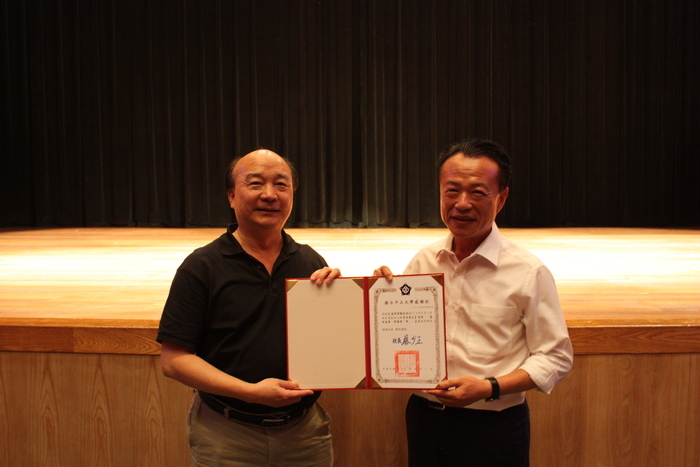
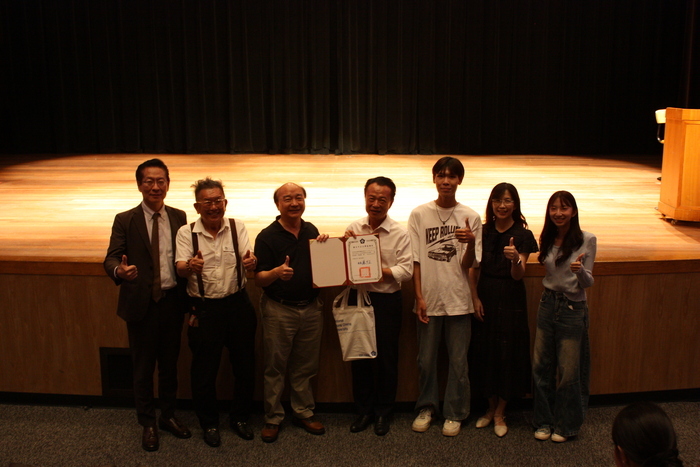
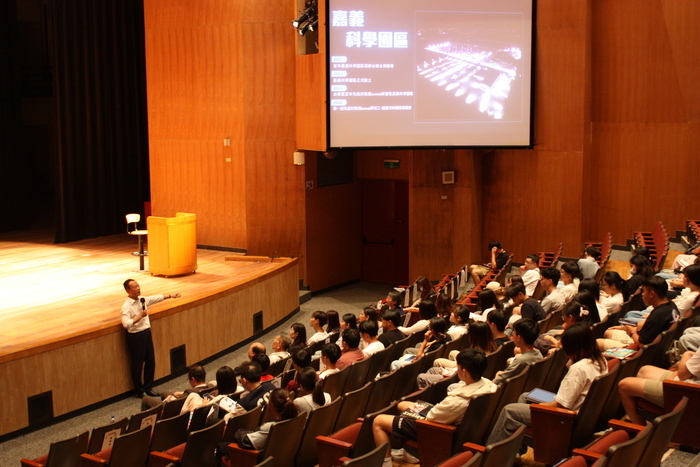
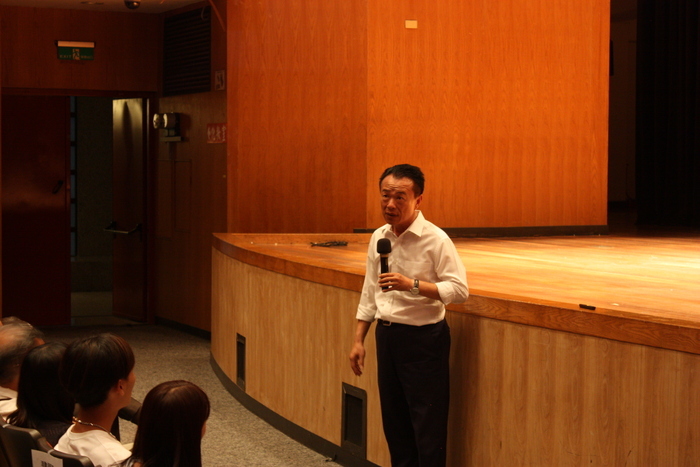
The political lecture series "Chiayi Has Industries, Ready for a New Chapter," organized by the Student Rights Department of the National Chung Cheng University (CCU) Student Association, was held on the evening of June 1 at the CCU Activity Center auditorium. Chiayi County Magistrate Chang-liang Weng was invited to campus to deliver a keynote speech titled "The Blueprint of a Five-Star Magistrate: Career Journey, Practical Sharing, and Future Planning for the Golden Decade." He shared the development history of Chiayi County, the vision for industrial transformation, and future career opportunities for youth with nearly 150 faculty members and students.
The lecture aimed to enhance students' understanding of regional development, public policy, and youth issues through the shared experiences of a prominent public figure. The event covered a diverse range of topics, including the historical context of Chiayi, local governance experiences, industrial layouts, the challenges of an aging society, and future urban development, allowing students to examine Chiayi's development opportunities and challenges from the perspective of a local chief executive.
First, Magistrate Weng shared Chiayi County's recent experience hosting the Taiwan Lantern Festival. He noted that real-time interaction with the public on the social media platform Threads enabled the government to quickly grasp visitors' feedback and adjust event planning instantly. This approach successfully enhanced the quality of the festival and increased the city's visibility. He also effectively communicated the core philosophy of the festival—"To Make Chiayi Seen"—which raised the profile of Taibao and placed Chiayi back on the national stage.
Reflecting on Chiayi's history, Magistrate Weng reviewed the agricultural development of the Chianan Plain during the Zheng and Qing Dynasties, the construction of the Chianan Canal by Yoichi Hatta to optimize irrigation, and the post-war land reforms and compulsory education systems that progressively laid the foundation for the economic growth of Chiayi and Taiwan. He pointed out that education and industrial development complemented each other, driving Taiwan's transition from an agricultural society toward industrialization and technology, while also leading to contemporary challenges such as urban population concentration and rural depopulation.
Addressing the current challenges facing Chiayi, Magistrate Weng stated that a youth labor shortage and limited employment opportunities remained critical issues for regional development. To counter this, the county government actively generated employment by simultaneously developing six industrial parks, successfully attracting substantial corporate investment and factory setups. Furthermore, the county government planned to establish a new consumer and commercial hub within the High-Speed Rail Special Zone to stimulate population return and regional prosperity through industrial development.
In managing potential conflicts between agricultural and industrial development, Magistrate Weng emphasized that Chiayi's expansion must balance environmental sustainability with industrial demands. Moving forward, the county will prioritize low-pollution, low-energy-consumption, and high-value-added industries. Through eco-friendly technology and smart agriculture, both sectors are expected to coexist and thrive. He also highlighted that an increasing number of young people have returned to their hometowns to enter agriculture in recent years, utilizing smart technology to lower farming thresholds and inject vital energy into traditional agriculture.
During the Q&A session, faculty and students raised questions regarding the declining birthrate, an aging population, flood control engineering, transportation infrastructure, and local industries. Regarding the aging demographics, Magistrate Weng shared his personal experience caring for his parents and introduced Chiayi County's achievements in expanding home care and long-term care services. Noting that an aging society is a collective national challenge, he stated that the government is not only refining the care system but also training personnel and elevating service quality, turning these initiatives into a benchmark for other local governments.
Turning to industrial development, Magistrate Weng explained that Chiayi successfully secured the establishment of the Chiayi Science Park and related technology industries in recent years. Notably, the integration of TSMC's advanced packaging plant brought an important opportunity for Chiayi's tech sector. He emphasized that Chiayi possessed sufficient land resources, a high-quality living environment, and progressively improving infrastructure, positioning it as a pivotal hub for Southern Taiwan's future industrial layout. Regarding the future development of Minxiong Township, a topic of great interest to CCU students, Magistrate Weng stated that the county government is advancing major projects such as railway elevation. This initiative is expected to revitalize land along the railway lines, creating dedicated spaces for commercial, arts, and cultural development, which will offer students more options for leisure, consumption, and performances while boosting the overall functionality of the university town.
The lecture successfully transformed the university into more than just a space for academic learning, fostering students' capacity for civic engagement and social participation. Through this direct dialogue between a local leader and young scholars, students gained profound insights into local governance and industrial realities, offering a fresh perspective as they contemplate their future careers and regional development.