

National Chung Cheng University College of Humanities Hosts International Workshop on East Asian Epigraphy Honoring Professor Mao Han-kuang’s 35-Year Legacy
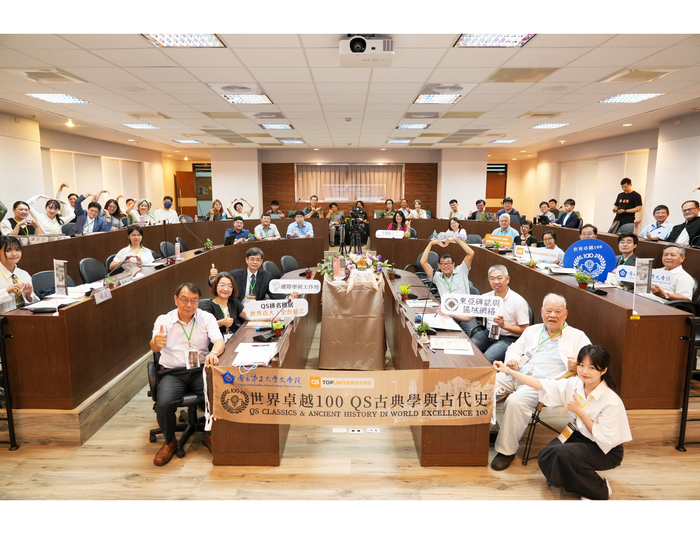
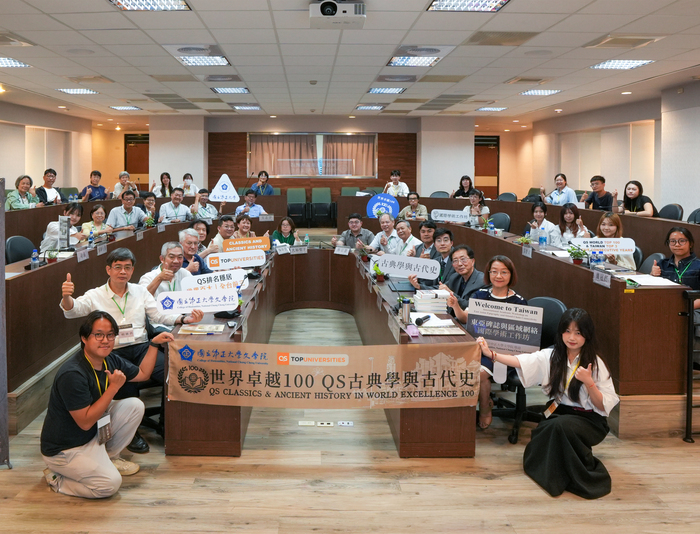
The College of Humanities at National Chung Cheng University hosted the International Academic Workshop on “East Asian Epigraphy and Regional Networks” from May 22 to 23, 2026. The workshop brought together scholars from Japan, Russia, Vietnam, South Korea, Malaysia, Hong Kong, and Taiwan to examine materials such as inscriptions, epitaphs, temple stele records, ancestral hall inscriptions, and other forms of commemorative writing. Through these sources, participants explored local society, religious networks, ethnic interaction, and transregional cultural exchange in the East Asian world.
Over the course of two days, the workshop featured four keynote lectures, twelve paper presentations, and one special report, for a total of seventeen academic presentations. Ten international and overseas scholars took part in the event, demonstrating the College of Humanities’ concrete efforts to advance East Asian regional studies and international academic exchange.
The opening ceremony began with remarks by Vice President Hong Hsin-yuan on behalf of the university, and was presided over by Dean Mao Wen-fang of the College of Humanities, who served as the workshop’s convener. In his remarks, Vice President Hong noted that the College of Humanities achieved outstanding results in the QS World University Rankings by Subject in Classics and Ancient History. The College remained among the world’s top 100 for five consecutive years, reaching 31st globally and 2nd in Taiwan in 2025, and maintaining its position at 65th globally and 3rd in Taiwan in 2026. These achievements highlighted the important place of CCU’s humanities and historical studies on the international academic map.
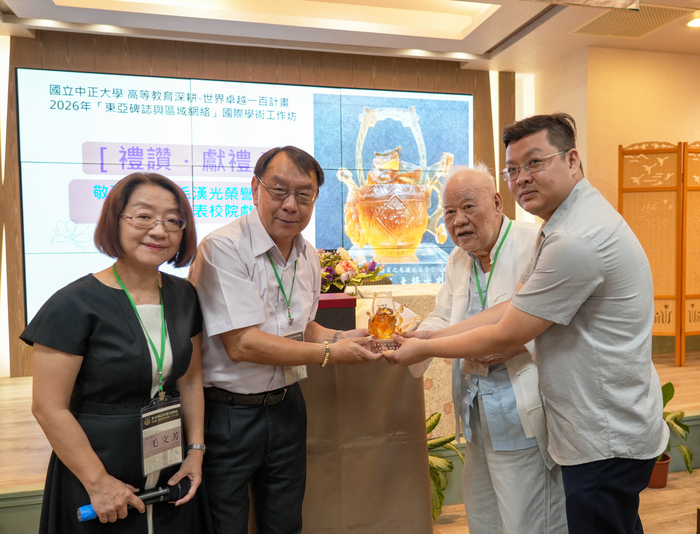
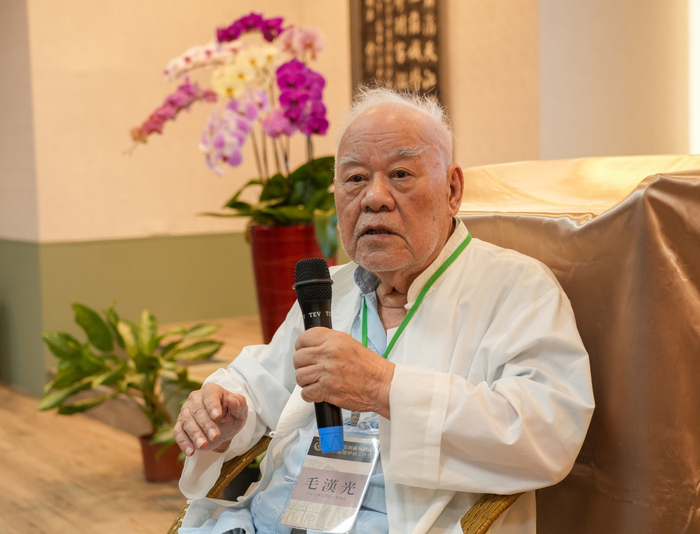
A special “Tribute and Presentation” ceremony was held during the opening to honor Professor Mao Han-kuang, Honorary Professor of the College of Humanities, founding chair of the Department of History, and founding dean of the College. Thirty-five years ago, Professor Mao came to National Chung Cheng University with a mission: to establish the Department of History and serve as the founding dean of the College of Humanities. He brought with him the epigraphic research methods and scholarly traditions he had long cultivated at the Institute of History and Philology, Academia Sinica. His work laid a deep foundation for the study of ancient history, medieval history, and epigraphy at CCU, helping the university become an important center for medieval Chinese history and epigraphic studies in Taiwan. Epigraphy has since become one of the internationally recognized strengths of CCU’s ancient history research.
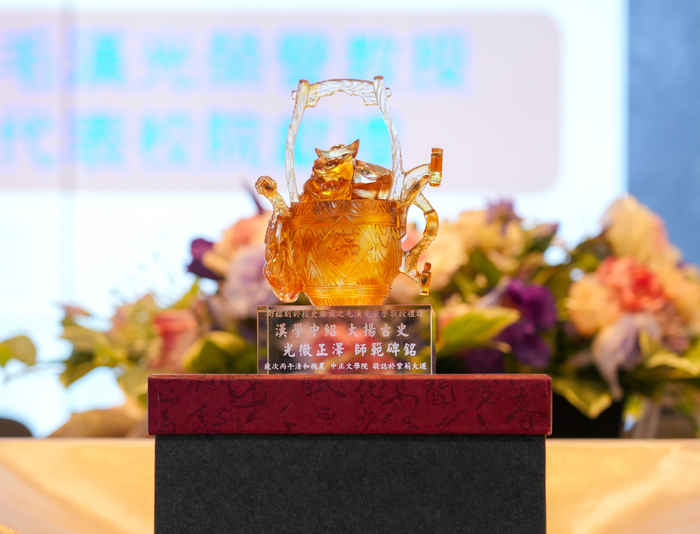
During the ceremony, Vice President Hong presented a tribute gift to Professor Mao on behalf of the university and the College. Under Dean Mao Wen-fang’s thoughtful arrangement, the College offered a liuli crystal “treasure bowl” and an embedded couplet reading: “Carrying forward Han learning, illuminating ancient history; Radiating noble virtue, serving as a model in the study of inscriptions.” The couplet was jointly composed by Vice President Lu Wei-hsin of WuFeng University and Dean Mao Wen-fang of the CCU College of Humanities. It skillfully incorporated the ideas of “Han-kuang,” “Chung Cheng,” “master scholar,” “ancient history,” and “epigraphy,” symbolizing Professor Mao’s contributions to continuing the tradition of Sinology, advancing ancient history, studying inscriptions, and serving as a model for later generations. It also expressed the College’s deep respect for its academic roots and its commitment to carrying forward this scholarly lineage.
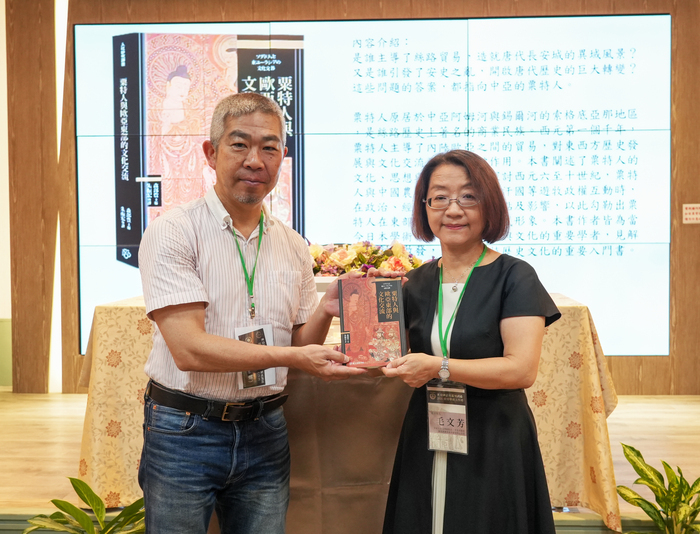
Another important moment in the opening ceremony was the presentation of the Chinese translation of Sogdians and Cultural Exchange in Eastern Eurasia. The volume was edited by Professor Moribe Yutaka of Kansai University, translated by a team of faculty and students led by Professor Chu Chen-hung of the Department of History at National Chung Cheng University, and published by National Taiwan University Press. Dean Mao Wen-fang presented the volume to Professor Moribe on behalf of the College of Humanities, symbolizing an important achievement in Taiwan-Japan academic cooperation, scholarly translation, and knowledge exchange.
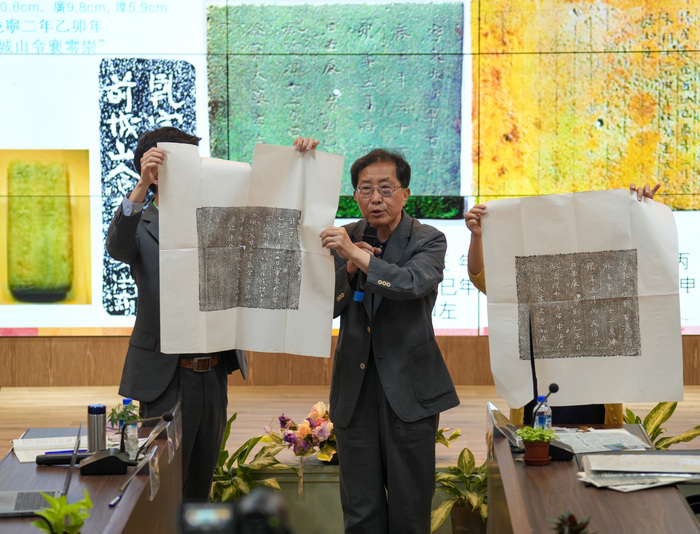
The workshop invited four internationally renowned scholars as keynote speakers: Professor Moribe Yutaka, Professor and Vice Dean of the Faculty of Letters at Kansai University, Japan; Professor Alexei Bokschanin, Chief Research Fellow at the Institute of History, Archaeology and Ethnology of the Peoples of the Far East, Russian Academy of Sciences; Professor Đinh Khắc Thuân, Honorary Research Fellow at the Institute of Hán-Nôm Studies, Vietnam Academy of Social Sciences; and Professor Sim Kyung-ho, Distinguished Professor Emeritus of Classical Chinese at Korea University. Their keynote lectures addressed the Qingmei communal bell inscription excavated in Hanoi, a nineteenth-century Tianhou temple inscription related to Chinese communities in the Russian Far East, newly discovered inscriptions from Vietnam’s Lê-Mạc period, and the historical development of Korean stele and epigraphic writing. Together, these lectures demonstrated the value of epigraphic materials across regions, languages, and historical contexts.
In recent years, the CCU College of Humanities continued to develop “mountain, sea, and island-chain studies” as an important direction in humanities research. Starting from Taiwan’s position in East Asia, this framework considered the historical connections among mountain regions, maritime worlds, and island communities. Taking epigraphic culture as its point of departure, this workshop connected classical Chinese writing, local social memory, and transregional cultural exchange across East Asia. It not only responded to the College’s thirty-five years of academic accumulation in ancient history and epigraphic studies, but also opened a new platform for future East Asian regional research and international collaboration.