

National Chung Cheng University’s Institute for Aging, Work and Wellbeing Hosts Forum on 'New Challenges for Taiwan’s Labor and Economy'
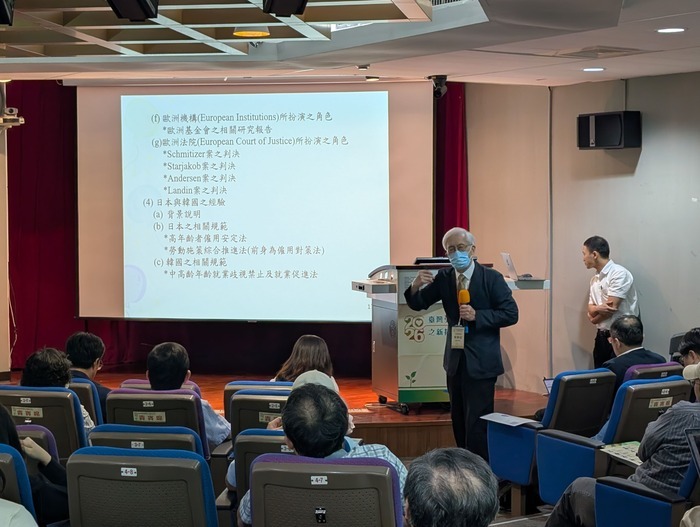
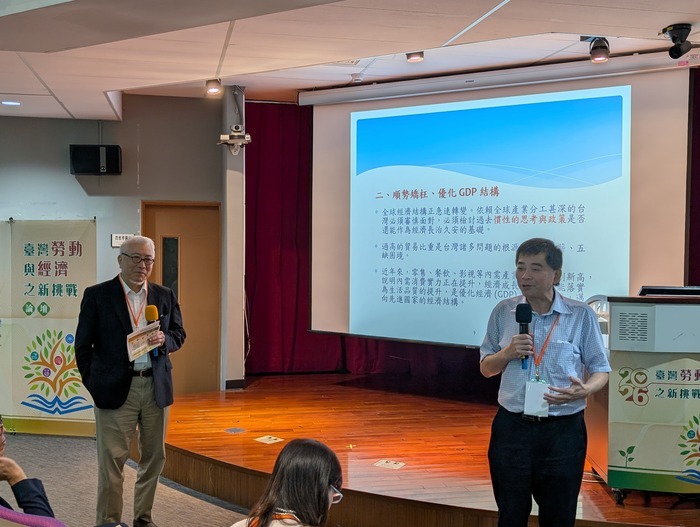
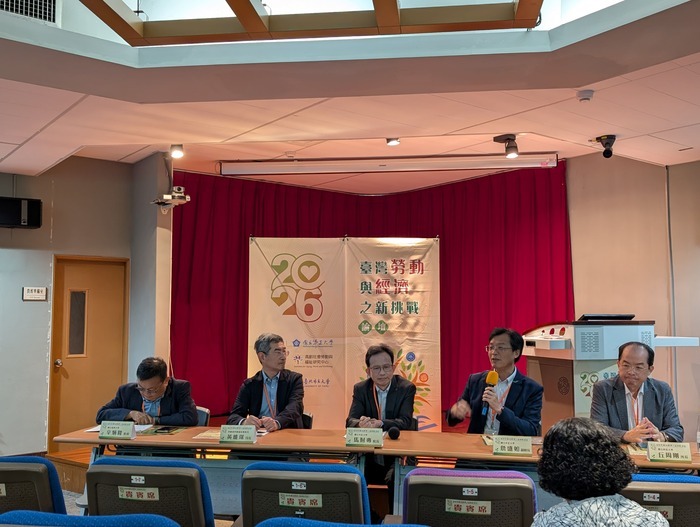
Facing mounting challenges brought about by digital transformation, the green economy, declining birth rates, labor shortages, stagnant wage structures, and the growing impact of artificial intelligence on employment patterns, Taiwan’s labor market and economic development entered a critical period of transition. In response to these emerging issues, the Institute for Aging, Work and Wellbeing (IAWW) at National Chung Cheng University hosted the forum “New Challenges for Taiwan’s Labor and Economy” on May 18 at the First Conference Room of Gongcheng Building, Bo-Ai Campus, University of Taipei.
The forum brought together scholars and experts in the fields of labor studies, economics, social policy, and aging society research to examine key issues shaping Taiwan’s future labor and economic development from institutional, industrial, and social support perspectives. Through keynote speeches, guided discussions, and panel dialogues, the event fostered interdisciplinary exchange between academic research and practical experience, while providing valuable insights for policymaking, industrial practice, and future collaborative research.
The opening session featured remarks by Vice President Sheng-Ru Jan of National Chung Cheng University and Honorary Chair Professor Huo-Sheng Chan of National Chi Nan University. During the first half of the forum, Academia Sinica Research Fellow Hsing-Kai Chiao delivered a keynote speech titled “Challenges in Developing Older Workers in Taiwan: Starting from the Prohibition of Age Discrimination in Employment,” exploring issues related to workforce participation among older adults and employment equality. Professor Chun-Jung Chiou of National Central University then presented “Industrial Competitiveness and Employment Challenges amid Global Economic and Trade Changes,” analyzing how shifts in the international economic landscape affected Taiwan’s industries and labor market.
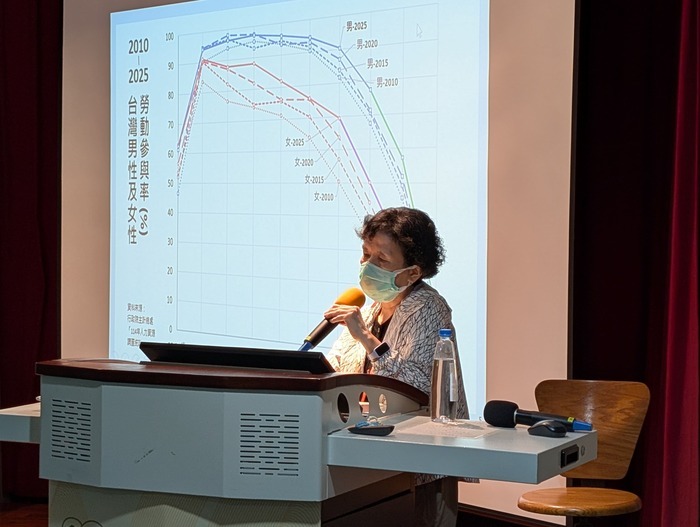
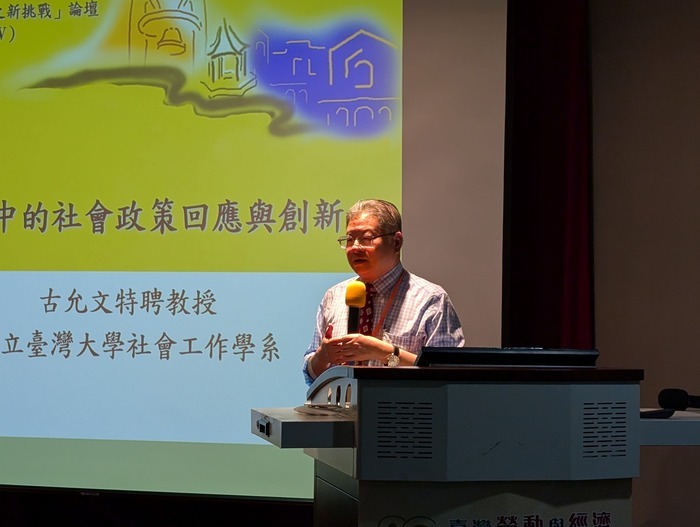
The second half of the forum, moderated by Director-General Wei-Chen Huang of the Department of Labor Welfare under the Ministry of Labor, focused on labor participation among middle-aged and older women, as well as policy responses in an aging society. Academia Sinica Research Fellow Chin-Fen Chang presented “Supporting Individuals and Reforming Institutions: Addressing the Low Labor Participation of Middle-Aged and Older Women,” discussing the intersection of gender, age, and institutional constraints in labor participation. Distinguished Professor Yun-Wen Ku of National Taiwan University further explored “Social Policy Responses and Innovation in an Aging Society,” examining how social policy could adapt to demographic and labor structure changes associated with population aging.
The forum concluded with a comprehensive panel discussion titled “New Challenges for Taiwan’s Labor and Economy,” featuring Director Chou-Kang Chiu of National Chengchi University, Director-General Wei-Chen Huang of the Ministry of Labor, Professor Ping-Lung Hsin of National Taiwan University, Vice President Sheng-Ru Jan of National Chung Cheng University, and Dean Tsai-Chuan Ma of National Chung Cheng University. Panelists discussed Taiwan’s complex challenges—including labor shortages, employment transformation, wage structures, and population aging—from the perspectives of labor policy, industrial development, social welfare, and governance in an aging society.
According to the organizers, the forum served not only as an academic platform for dialogue on labor and economic issues, but also as an opportunity to cultivate shared awareness and collective action through interdisciplinary exchange. The Institute for Aging, Work and Wellbeing (IAWW) at National Chung Cheng University will continue to strengthen connections among academia, policymaking, and professional practice in the future, further advancing research on labor welfare, economic development, and social support systems in an aging society, with the goal of promoting a more inclusive and sustainable society.