

CCU Team Attended the International Nanotechnology Exhibition to Showcase Taiwan-Japan Building Sustainability Results
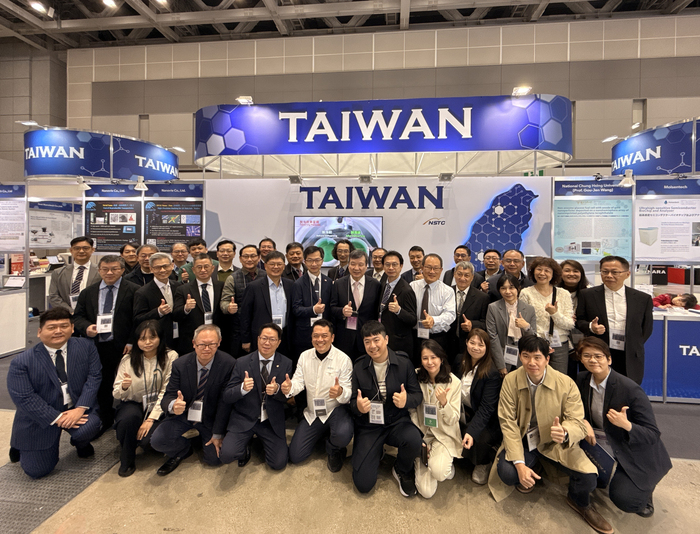
The 25th International Nanotechnology Exhibition & Conference (nano tech 2026) opened grandly from January 28 to 30 at Tokyo Big Sight in Japan. A research and industry-academia team from National Chung Cheng University (CCU), led by Professor Chien-Yen Chen of the Department of Earth and Environmental Sciences, participated in the exhibition alongside the CCU startup, Yu-Zheng Engineering Technology Co., Ltd. They showcased Taiwan's innovative R&D energy in microbially mineralized nano-building materials and sustainable construction technology, receiving high attention.
Microbially Mineralized Nano-Building Materials: Creating a New Generation of Resilient Buildings with Self-Healing Capabilities
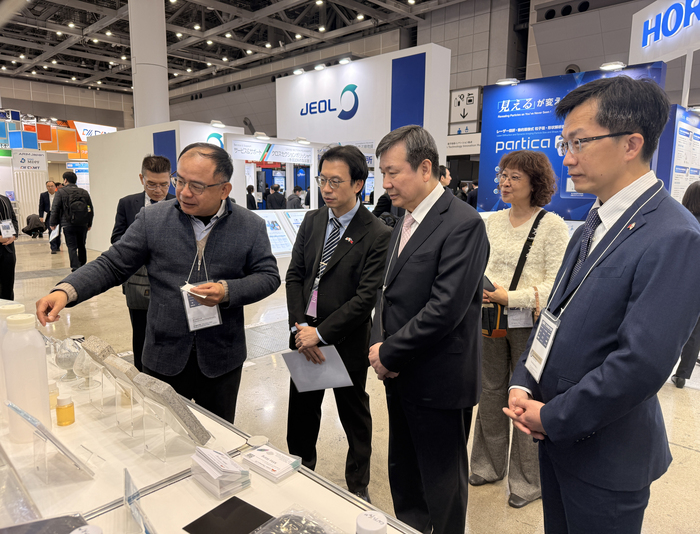
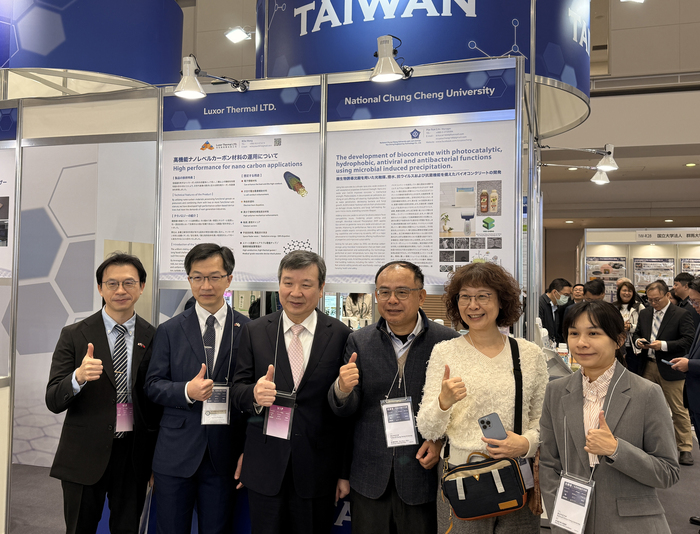
The CCU team members included Professor Chien-Yen Chen, Ph.D. student Pin-Yun Lin from the Department of Chemistry and Biochemistry, and Environmental Engineer Yen-Yu Hsiao from Yu-Zheng Engineering Technology Co., Ltd. During the exhibition, Ambassador Yi-Yang Li, the representative to Japan, visited the "Taiwan Pavilion" and the CCU booth. He expressed high praise for CCU's research results that combine basic science, engineering applications, and industrial innovation.
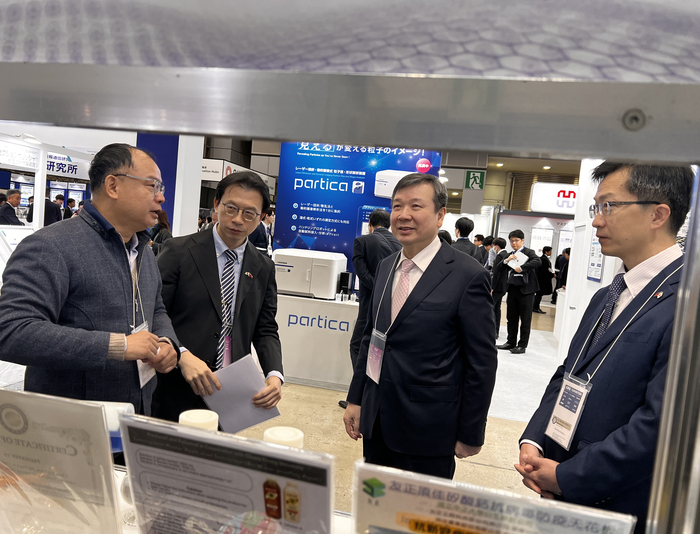
Professor Chien-Yen Chen detailed to Representative Yi-Yang Li, Director Jia-Wen Wu, and international guests that the National Chung Cheng University (CCU) team has long been dedicated to the research of Microbially Induced Mineral Precipitation (MIMP / MIZP) technology and successfully applied it to advanced building materials. The technology generates mineral nano-crystals inside materials through microorganisms, effectively enhancing structural strength and durability, repairing micro-cracks from earthquakes or environmental stress, sealing fissures, and inhibiting water seepage to achieve waterproofing. It also gives materials photocatalytic functions, improving air purification and self-cleaning.
This innovative material concept responds to the urgent need for structural safety and resilience in earthquake-prone areas and introduces a "human-centered" next-generation healthy building philosophy, balancing safety, environmental quality, and sustainability, showing the integration of engineering and public health.
Collaborations Between Academia and Startups: Deepening Taiwan-Japan Exchanges in Nanotechnology and Sustainable Technology
The participation of the National Chung Cheng University (CCU) team also exemplified a model of successfully linking university research results to industrial applications. Yu-Zheng Engineering Technology Co., Ltd. has long collaborated with CCU to advance laboratory R&D results into practical engineering and market applications, demonstrating Taiwan's international competitiveness in the fields of nanomaterials, green building, and sustainable engineering.During his visit, Representative to Japan Yi-Yang Li pointed out that nanotechnology is an essential foundation supporting semiconductors, advanced materials, energy, and building technology. He stated that deepening scientific research cooperation between Taiwan and Japan under shared values of democracy, freedom, and the rule of law is of critical significance for constructing resilient international supply chains. He also commended the CCU team for its substantive contributions to technology diplomacy and academic exchange.
CCU Continues to Promote Sustainability, Resilience, and Health Technology
National Chung Cheng University (CCU) has long cultivated research in environmental science, nanotechnology, and sustainable engineering, actively responding to major challenges such as global climate change, urban safety, and healthy living. The participation in nano tech 2026 not only highlighted CCU's international visibility in the field of nano and biomineralized building materials but also laid a solid foundation for future Taiwan-Japan cooperation in sustainable architecture, smart materials, and environmental technology.