

Former Vice Premier Jong-Chin Shen Spoke at CCU, Exploring Taiwan’s Global Competitiveness Through a Resilient Supply Chain
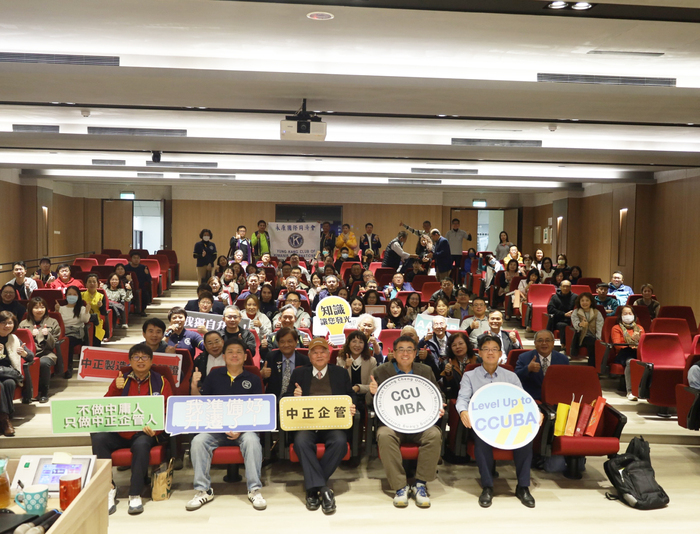
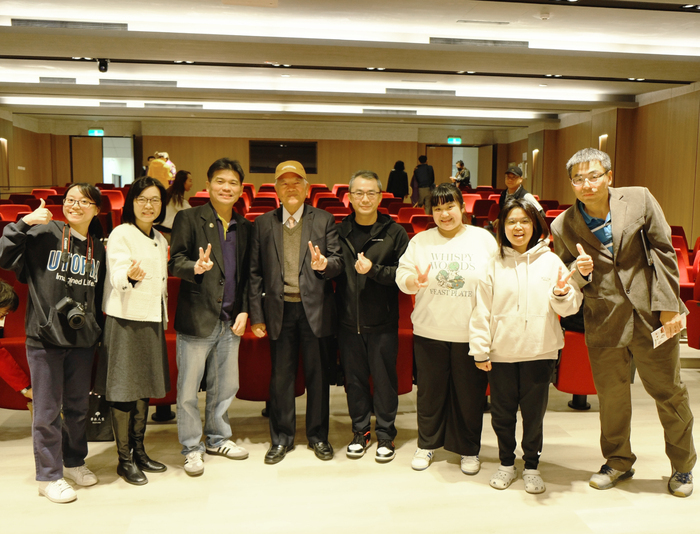
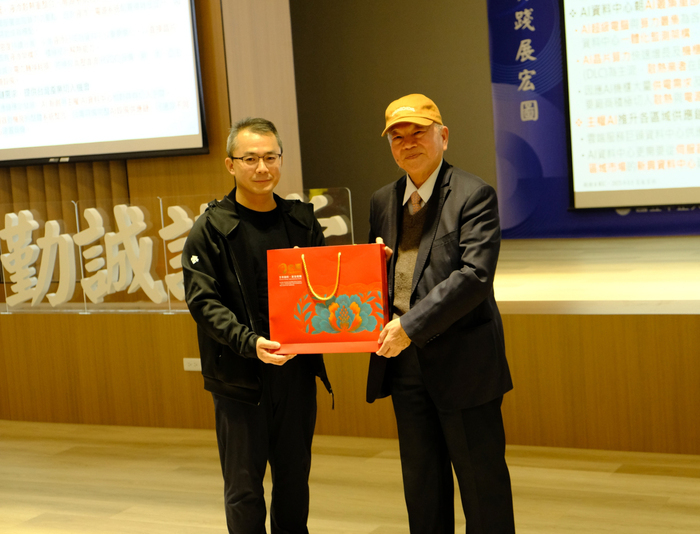
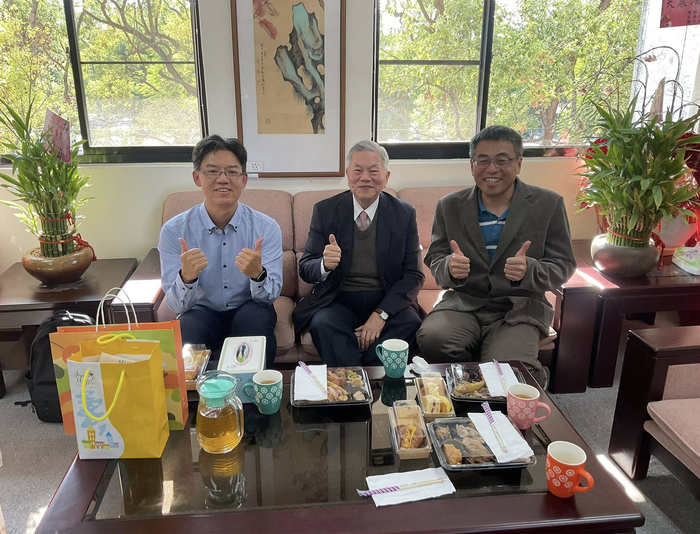
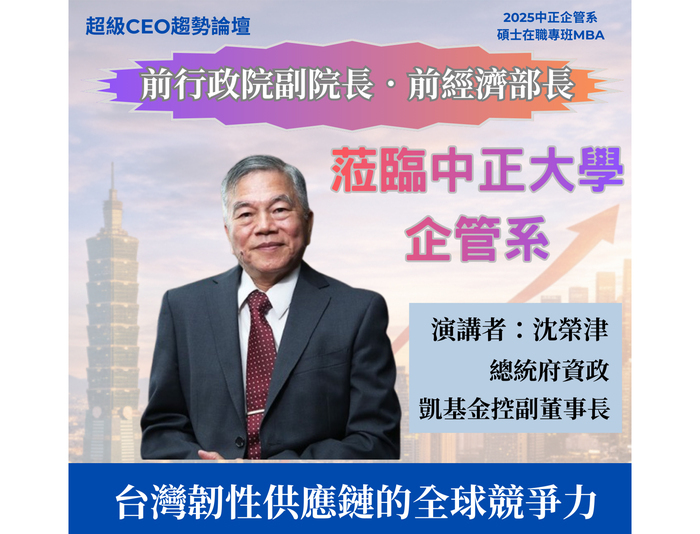
On January 3, 2026, National Chung Cheng University (CCU) hosted a keynote lecture at the Cheng-Cheng Auditorium in the College of Management. The keynote speaker was Jong-Chin Shen, former Vice Premier and former Minister of Economic Affairs, who currently serves as Senior Advisor to the Office of the President and Vice Chairman of KGI Financial Holding. He delivered a talk titled “Taiwan’s Global Competitiveness Through a Resilient Supply Chain.”
Drawing on his extensive experience in public policy and industrial development, Senior Advisor Shen offered in-depth insights into how Taiwan strengthened its industrial foundations amid growing global uncertainty. The event attracted a full audience of alumni from the CCU Department of Business Administration, general CCU alumni, and industry professionals.
Shen noted that geopolitical tensions, shifts in the global trade environment, and rapid technological advancements accelerated the restructuring of global supply chains in recent years. He emphasized that Taiwan must continue to leverage its core strengths to maintain a critical position in an increasingly competitive international landscape. He highlighted four key pillars—advanced manufacturing, advanced semiconductor processes, high-tech research and development, and green energy—illustrating how strategic government policies supported industrial upgrading and enhanced supply-chain resilience.
He also shared practical case studies from the metals, machinery, textiles, printed circuit board (PCB), and aerospace industries, demonstrating how the integration of artificial intelligence (AI), the Internet of Things (IoT), and big data enabled smarter and more efficient production. According to Shen, such digital transformation not only improved product quality but also helped small and medium-sized enterprises (SMEs) expand into global markets. He stressed that digital transformation was no longer exclusive to large corporations but remained a pressing challenge for businesses across all sectors.
Looking ahead, Shen introduced President Ching-Te Lai’s vision of the “Five Trusted Industries,” which included semiconductors, artificial intelligence, defense, cybersecurity, and next-generation communications. Through policy support, talent cultivation, and closer collaboration between industry and academia, the initiative aimed to build a comprehensive industrial ecosystem and position Taiwan as a trusted partner in the global technology supply chain.
In addition, Shen outlined the draft “Ten New AI Major Initiatives,” which focused on expanding AI applications across industries, building sovereign computing capacity, cultivating AI talent, and advancing smart government. This blueprint charted Taiwan’s path toward becoming an “AI Island,” helping the public better understand emerging industry trends and future career opportunities.
Professor Cheng-Kui Huang, Chair of the Department of Business Administration at CCU, remarked that the lecture enabled students and industry participants to better understand the strategic thinking behind Taiwan’s industrial policies and gain clearer insights into developments in technology and industry. He added that Shen’s clear and engaging presentation deepened the audience’s understanding of AI, semiconductors, and industrial transformation, while also shedding light on the government’s policy direction.
Chun-Pei Chang, President of the CCU Department of Business Administration Alumni Association, noted that Taiwan is home to more than 1.7 million SMEs, many of which remained cautious about investing in the hardware and software required for digitalization and AI adoption. Such investments were often viewed as high-risk compared to more tangible production activities. He emphasized that, as demonstrated by Shen’s years of public service, effective leadership required close engagement with industry realities to identify challenges and create win-win solutions. Chang also praised the Department’s “Super CEO Trend Forum” for promoting dialogue among industry, government, and academia, and for inspiring innovative thinking.