

CCU USR Driving Cross-Domain Collaboration to Shape a Sustainable Future
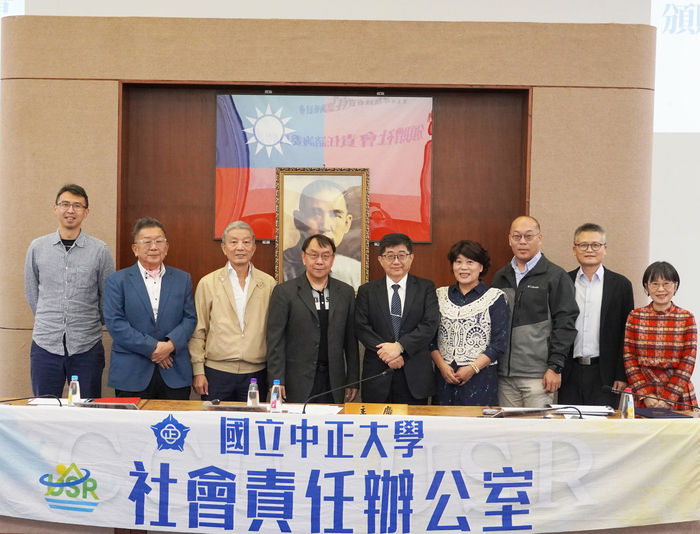
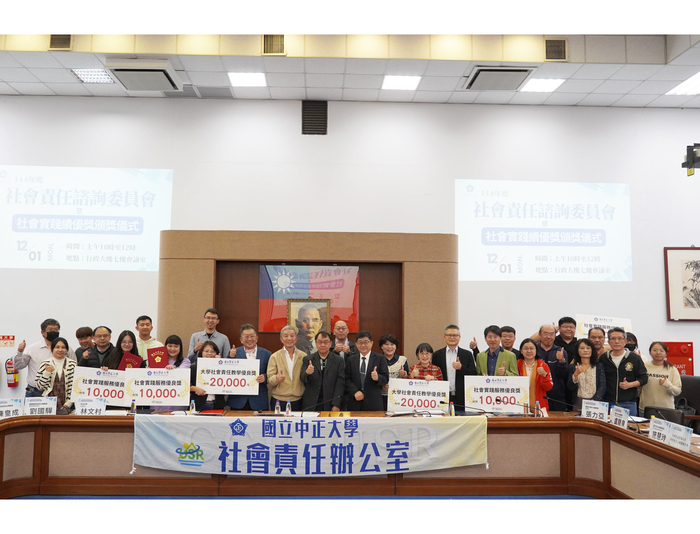
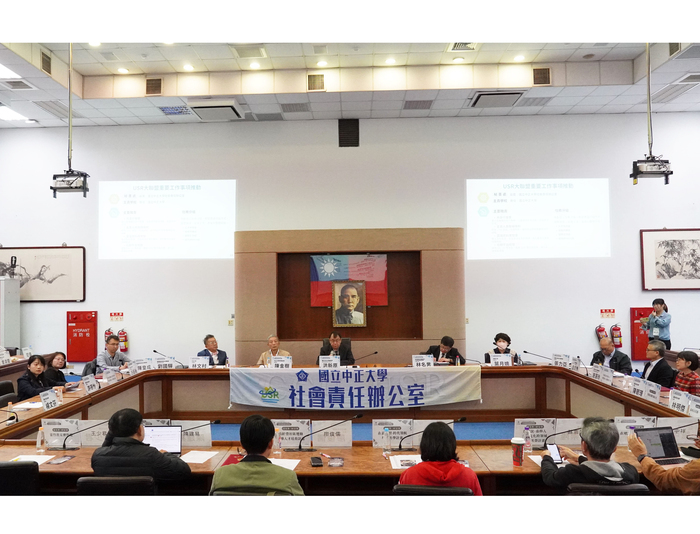
National Chung Cheng University (CCU) hosted the 2024 University Social Responsibility (USR) Advisory Committee Meeting and Social Practice Excellence Awards Ceremony on December 1st, chaired by Vice President Hsin-Yuan Hung. The event brought together committee members from government, academia, and industry, alongside CCU’s USR teams, to discuss the development of university social responsibility, collaboration mechanisms with local partners, and the governance direction for the years ahead. Professional insights offered by the committee are expected to further strengthen CCU’s USR strategy and deepen long-term partnerships in the Chiayi-Yunlin region.
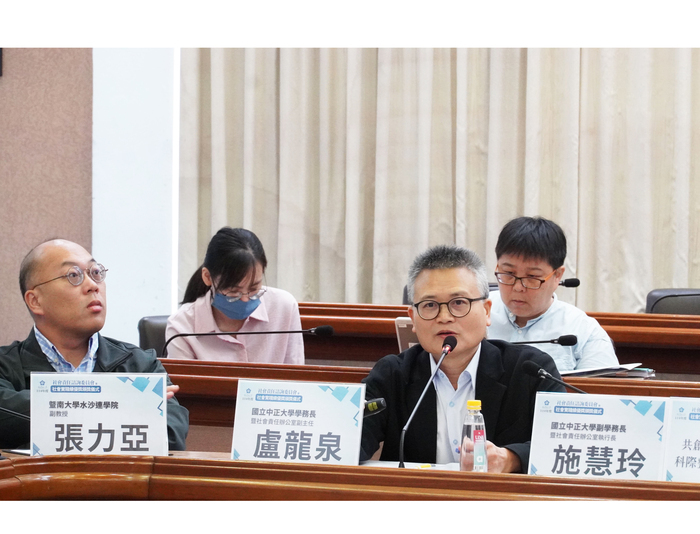
This year’s advisory committee comprised leaders across diverse fields, including Director Huang-Cheng Chen of the Chiayi County Planning Department, Deputy Executive Director Ming-Nan Lin of the Ministry of Health and Welfare’s Agency for Social Welfare Institutions, Associate Professor Li-Ya Chang of National Chi Nan University, Vice President Yueh-Chiao Yeh of Nanhua University, Chairman Chin-Shu Chen of the CCU Academic Foundation, and Honorary Doctorate recipient Wen-Tsun Lin, Chairman of the Shun-Yi Group. CCU expresses sincere appreciation for their continued guidance, which has enabled the university to respond more precisely to community needs and social challenges.
The ceremony also honored outstanding faculty and students whose USR work demonstrated exceptional impact and contribution. The USR Outstanding Teaching Award was presented to Professor Shyr-Ling Shih of the Department of Law and Assistant Professor Hui-Chen Fang of the College of Management. The USR Social Practice Award recognized four recipients: Professor Chun-Ju Liao of the Department of Athletic Sports, doctoral student Po-Ju Tseng, graduate student Wan-Ting Huang, and graduate student Yu-Wen Tseng, all of whom have played active roles as USR ambassadors.
Vice President Hung emphasized that knowledge must not remain confined to classrooms—it must reach communities, respond to real needs, and become a force for positive change. This year’s awardees exemplify this mission-driven engagement, bringing academic expertise into local contexts and addressing social issues directly.
Hung further noted that CCU’s USR development has evolved from individual project-based initiatives toward a more integrated, university-wide governance framework in recent years. With Chiayi-Yunlin as its primary field site, CCU focuses on issues such as the aging society, rural education and culture, local revitalization, and agricultural and food sustainability. Through interdisciplinary collaboration and place-based learning, faculty and students are encouraged to engage directly with society and transform knowledge into impact.
In 2024, CCU also initiated the USR Alliance, partnering with 22 universities nationwide to establish shared learning mechanisms, talent development pathways, field-site exchanges, inter-university proposals, and international collaboration. “The Alliance is designed to connect resources across campuses, support mutual learning, and amplify the collective impact of USR in the region,” Hung stated.
During the meeting, CCU’s USR teams presented outcomes of the Elderly Well-being & Human Rights Integration Project, the Alishan Indigenous Culture & Sustainable Talent Development Project, and the USR HUB Program, followed by consultation and discussion with committee members. Feedback addressed field immersion, governance models, interdisciplinary cooperation, and sustainability assessment, offering valuable direction for CCU’s next phase of development.
Looking ahead, CCU remains committed to the vision of “Local Roots, Social Solidarity; Cross-Domain Integration, Sustainable Governance.” The university will continue strengthening regional partnerships, cultivating socially engaged young talent, and striving to become a key driver of sustainable development and a leading model for USR in Chiayi and beyond.