

The 4th International Conference on Forensic Psychology 2025: "Dialogue between Forensic Psychiatry and Forensic Psychology"
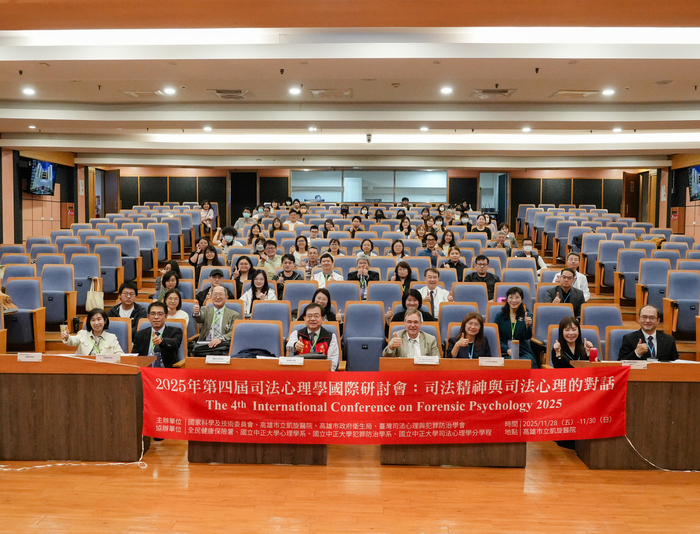
The 4th International Conference on Forensic Psychology 2025, titled "Dialogue between Forensic Psychiatry and Forensic Psychology," was successfully convened at National Chung Cheng University.
Forensic Psychology, which the American Psychological Association (APA) defines as "the professional practice of psychology within the judicial and legal systems," reflected the intersection of legal theory, procedural law, and clinical ethics through its scientific and technological applications. Similarly, Criminological Psychology contributed significantly to the understanding of criminal behavior, courtroom procedures, and the management of offenders.
Both Forensic and Criminological Psychology underwent rapid growth, playing decisive roles in family mediation, expert testimony, and recidivism risk assessment. Professional evaluation and judgment in these sectors required specialized knowledge in both crime prevention and psychology. Consequently, the Taiwan Association for Forensic Psychology and Crime Prevention was established to cultivate experts with dual proficiency in criminology and psychology, providing a robust foundation for the field's development in Taiwan.
The inaugural International Conference on Forensic Psychology was held in November 2022, exploring the nature of justice despite the pandemic. This was followed by the second conference in September 2023, which addressed the AI era, and the 2024 event at National Taiwan University. These gatherings demonstrated that forensic psychology and crime prevention have become increasingly vital and deeply rooted in the nation's judicial landscape.
The 2025 conference facilitated a profound "Dialogue between Forensic Psychiatry and Forensic Psychology." International experts from Germany, Thailand, and Japan joined Taiwanese scholars to deliver keynote speeches, sharing insights into mental health care systems, psychological assessment in correctional institutions, and contemporary ethical decision-making.
Furthermore, two specialized panels explored cutting-edge topics, including the dialogue between psychology and psychiatry, the new provisional placement system, localized risk assessment for juveniles, and the application of fMRI brain imaging in areas such as lie detection and trauma interviews. These sessions fostered a vibrant exchange of frontier ideas, aiming to optimize the consensus between academic research and practical judicial work in Taiwan.