

CCU Promotes Interdisciplinary Learning Among Humanities and Social Sciences Students: 60% of AI Competition Participants were from Non-STEM Backgrounds
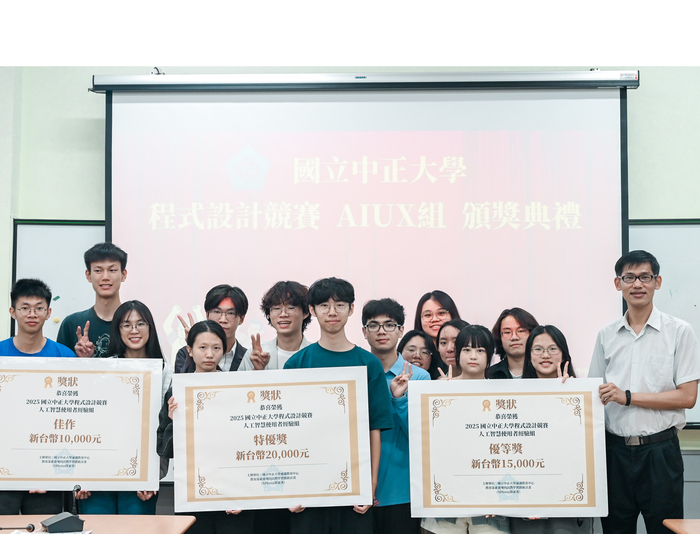
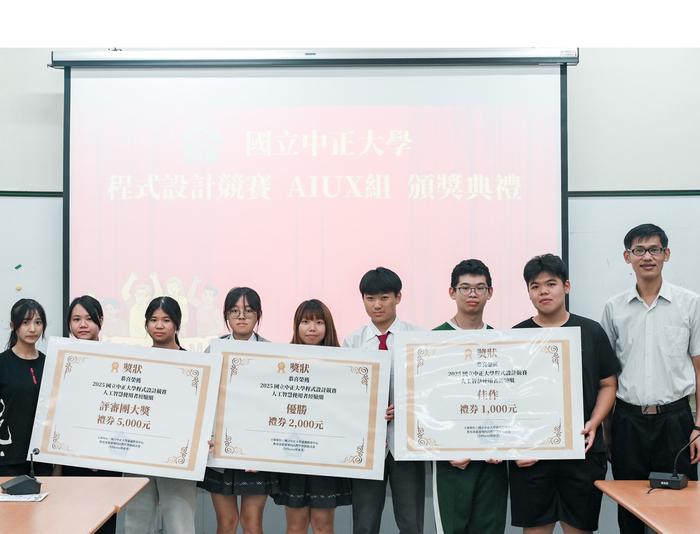
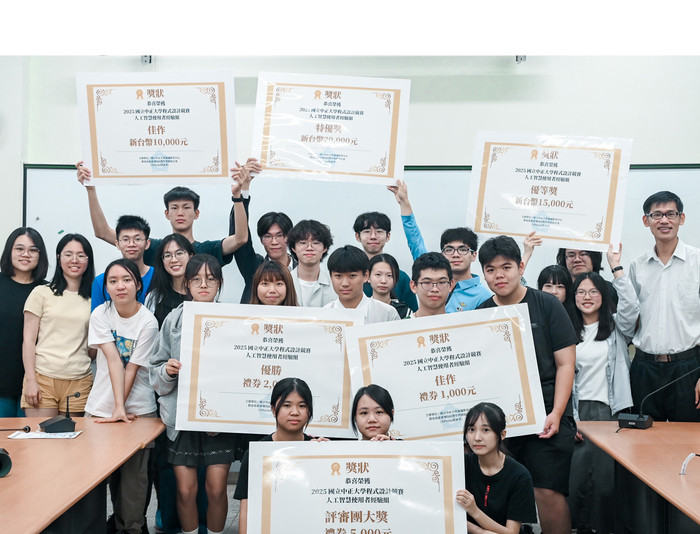
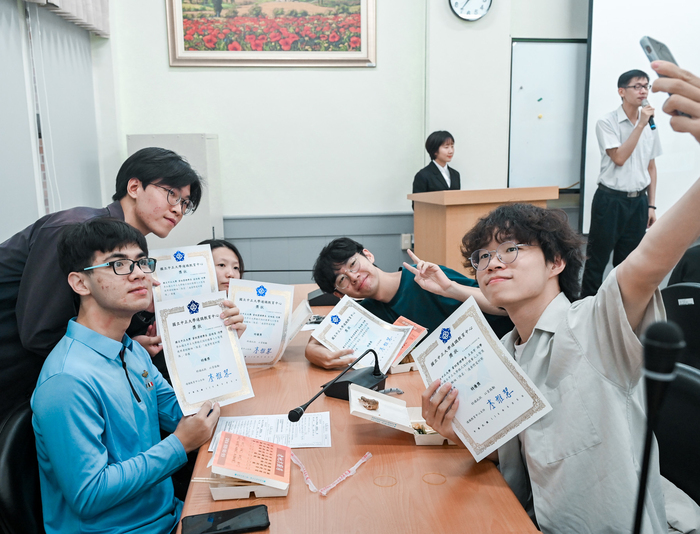
To enhance digital literacy across disciplines, especially in the humanities and social sciences, National Chung Cheng University (CCU) has actively promoted AI-related education initiatives. Organized by the Center for General Education and supported by the Ministry of Education’s Project for Promoting Curriculum-Oriented Innovative Teaching and Learning in Higher Education (Xplorer Project), the CCU Programming Competition – AI User Experience (AIUX) Track held its award ceremony, showcasing the concrete achievements of interdisciplinary AI education.
This year’s university division attracted 29 teams and 109 student participants, of whom 69 (63%) were from non-STEM backgrounds. Students from departments such as Philosophy, Foreign Languages and Literature, Law, Information Management, and Business Administration enthusiastically participated, demonstrating CCU’s strong commitment to fostering interdisciplinary learning that integrates technology with the humanities. Teams were required to present their AI application scenarios and ethical considerations, focusing on user-centered innovation.
After a two-stage evaluation process—preliminary document review and final presentation—eight teams advanced to the finals, with four teams receiving awards. The Grand Prize went to “Fast Love Inspector”, which proposes an AI-powered dating assistant designed to conduct a seven-day dialogue with users to generate multidimensional personal profiles for more accurate matchmaking. The system is envisioned to feature conversation previews, AI-suggested topics, and guided social interactions to ensure both safety and meaningful engagement.
The First Prize was awarded to the team “Y4” for their project “Memory Taste”, an envisioned AI-assisted platform for preserving and reproducing traditional family recipes. By integrating speech recognition, image analysis, video processing, and user feedback mechanisms, the system aims to systematically capture oral culinary knowledge from older generations and recreate cooking processes through gesture analysis, preserving not only flavor but also cultural memory.
The competition also featured a high school invitational track, with 11 students from National Singang Senior High School of Arts, Chiayi County Jhuci Junior High School, and Chiayi County Yung Ching Senior High School. The team from Singang received the Judges’ Grand Prize and an NT$5,000 award for developing an AI-based emotional well-being assistant. Their system provides real-time emotional detection, personalized stress-relief advice, voice care features, and safety alerts to help teenagers manage their mental health.
Director Ya-Hui Lee of the Center for General Education remarked that the competition not only showcased students’ creativity in applying AI to social issues, but also highlighted the importance of ethical reflection and critical engagement with technology. The outcomes will be incorporated into future course materials to form a “learn–practice–apply” teaching cycle. Moving forward, CCU will continue fostering interdisciplinary talent equipped with both technological literacy and a strong sense of public value, advancing the university’s mission to integrate digital competence with humanistic thinking.