

National Chung Cheng University Hosts “Conference on Applications of Generative AI for Sustainable Smart Cities” — Ushering in a New Era of Smart Governance and Sustainable Development
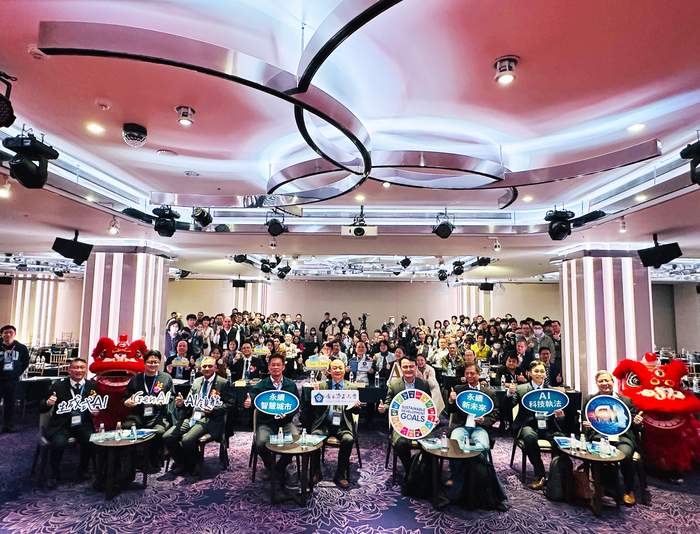
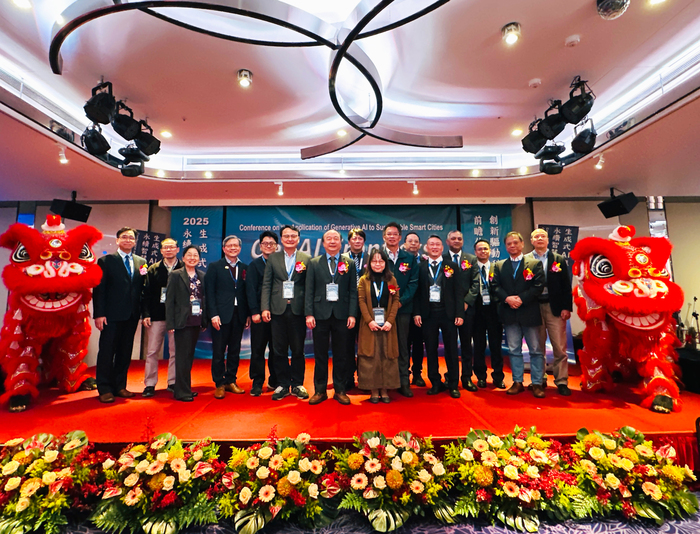
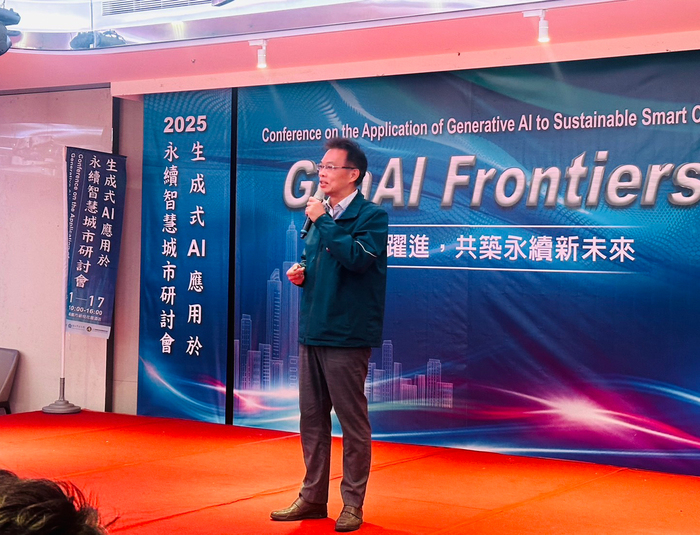
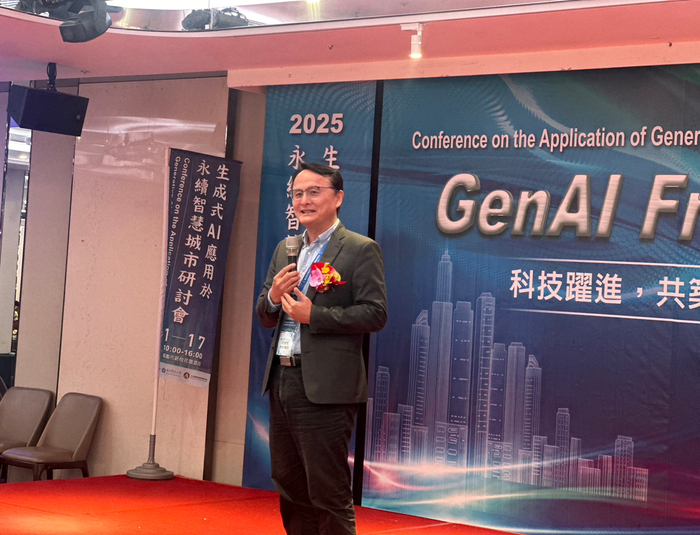
On January 17, National Chung Cheng University (CCU) held the Conference on Applications of Generative AI for Sustainable Smart Cities, attracting over 200 representatives from government, business, and academia. The conference explored how generative AI can drive major transformations in smart city governance and accelerate progress toward sustainable development goals. This event is considered a key driver of digital transformation for smart cities, with renowned speakers sharing insights on the application prospects of generative AI and discussing how advanced technologies can enhance urban governance efficiency to build more resilient and sustainable cities.
The opening ceremony featured notable guests, including CCU President Dr. Sean Shaw-Jenq Tsai, Director General of the Environmental Protection Bureau, Chiayi County Government Mr. Huey-Chuan Chang, and the newly elected 6th President of National Yunlin University of Science and Technology Distinguished Professor Dr. Chuan-Yu Chang. Their opening addresses marked the beginning of a new chapter in innovative applications of smart governance and future urban development.
In his opening remarks, President Tsai highlighted the unprecedented opportunities that generative AI brings to urban governance, emphasizing its potential to streamline administrative efficiency and enhance the quality of life for citizens. “National Chung Cheng University has long been committed to integrating academic research with practical applications. By investing in cutting-edge technology research, we aim to harness academic expertise to advance social practice,” said President Tsai. “Through this conference, we hope to promote the practical applications of generative AI in smart cities while addressing legal and ethical frameworks to ensure that the technology meets societal needs.”
Director Chang of the Chiayi County Environmental Protection Bureau shared that Chiayi County is currently utilizing smart enforcement of environmental protection laws by integrating CCTV footage with AI technology to enhance the efficiency of detecting illegal waste disposal, thus significantly improving environmental quality. He expressed his hope to continue collaborating with CCU in exploring more innovative AI applications in smart governance to provide citizens with a better living environment. Distinguished Professor Chuan-Yu Chang from National Yunlin University of Science and Technology underscored the importance of cross-institutional and regional collaboration, calling for the creation of regional alliances to advance forward-looking urban sustainability strategies.
During the conference, several prominent speakers from both domestic and international institutions shared their insights on the future applications of generative AI across various sectors. Prof. Hung-Yi Lee from National Taiwan University discussed how generative AI can improve the efficiency of educational resource distribution by automating grading and providing personalized learning support, thereby alleviating teachers' workloads and promoting educational equity. Mr. Karthigeyan Sethumadhavan, Country Head of Tata Consultancy Services Taiwan, focused on global trends in generative AI, emphasizing that the technology is not only reshaping traditional industry models but also creating new value chains in healthcare, manufacturing, and smart city management.
Dr. Wei-Bin Lee, CEO of Hon Hai Research Institute, presented practical examples of generative AI applications in smart cities, including smart monitoring, energy management, and environmental monitoring. He pointed out that generative AI can enable city managers to more accurately predict urban development trends, improve citizens' quality of life, and address pain points in urban governance. Prof. Shang-Chih Liu, Chair Professor at National Yang Ming Chiao Tung University, highlighted the regulatory challenges posed by the rapid development of generative AI. He emphasized the need to consider legal, ethical, and privacy issues alongside technological advancements. Mr. Jung-Kuei Chang, Chairman of Ai3 Artificial Intelligence Co., Ltd., shared new business strategies in the AI 2.0 era, explaining how industries can leverage generative AI to accelerate digital transformation and enhance market competitiveness. He emphasized that generative AI is not merely a tool but a key driving force for transforming business models.
Prof. Pao-Ann Hsiung, Director of the AI Research Center at CCU and organizer of the conference, stated that through close collaboration with local governments, CCU has achieved notable results in traffic management, environmental law enforcement, and disaster management. “The development of generative AI is rapidly changing how we govern cities. Our smart city monitoring platform has already demonstrated practical success. Moving forward, we will continue to develop more innovative applications to assist local governments in improving municipal management efficiency and effectively address future challenges,” said Prof. Hsiung.
The successful hosting of this conference highlights National Chung Cheng University’s leadership in the fields of smart cities and generative AI. It provided an important platform for industry, government, and academia to exchange ideas. Looking ahead, CCU plans to integrate academic resources and bolster industry-government collaboration to advance the development of “generative digital twin systems.” By leveraging AI technology, these systems will assist government agencies in disaster prediction and real-time decision-making, enhancing urban resilience and public safety, and ultimately creating a better society.