

First Public Release of the Distribution of Hunting Grounds of the Tsou Clan: Promoting the Construction of Traditional Knowledge at National Chung Cheng University
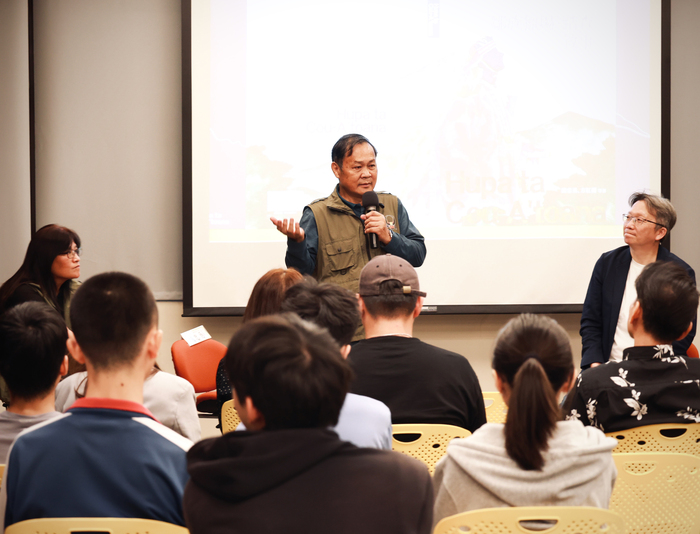
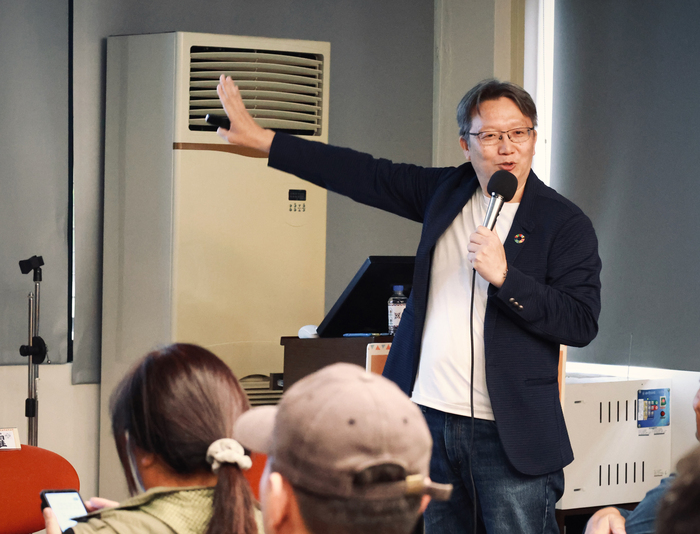
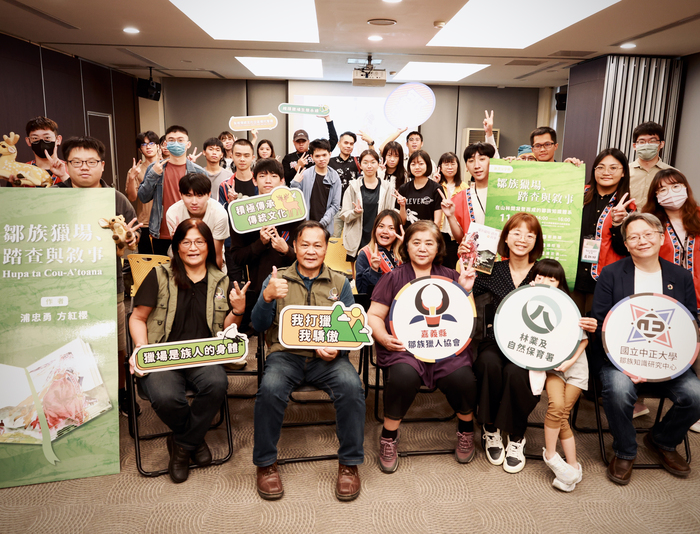
The book Tsou Hunting Grounds, Field Surveys, and Narratives was compiled following three years of fieldwork, documenting eight Tsou villages, 13 hunting trails, and interviews with 20 Tsou hunters. It is the first systematic publication revealing the distribution of hunting grounds across various Tsou communities, with the collaboration of the Chiayi County Tsou Hunters Association and the Forestry Conservation Department of the Ministry of Agriculture. The book was officially launched at three events: on November 7 at 18:00 at Hongya Bookstore in Chiayi County, November 18 at 14:00 at the Cultural Center of National Chung Cheng University, and November 20 at 10:00 at the Te'fuye Hunter's Bookstore in Alishan Township.
The moderator for the book release events was Tsou Hunters Association Chairman Pu Zhenzhu, while the main speakers were the two primary authors: Tsou hunter and CCU Professor Pu Zhongyong and female hunter and the retired Principal of Shinmei Elementary School Fang Hongying. Additionally, representatives from government agencies, other villages, and academic scholars were invited to give introductory remarks. The Indigenous Education and Tsou Knowledge Research Center at National Chung Cheng University not only supported the academic process during the book’s writing and publication but also helped classify and archive the knowledge presented in the book according to the Tsou ontology. This effort aims to make the traditional knowledge more accessible for preservation and transmission.
The Indigenous Education and Tsou Knowledge Research Center at National Chung Cheng University is dedicated to constructing a systematic Tsou cultural knowledge framework and works closely with important Tsou organizations in areas such as traditional research, cultural promotion, and educational practices. The center’s director, Zheng Shengyao, stated that through publishing works like Tsou Hunting Grounds, Field Surveys, and Narratives, traditional culture can reach a wider audience and allow readers to better understand the indigenous peoples’ traditional forest wisdom and its deeper significance.
Hunting is a traditional economic activity vital to the Tsou people, involving clan relationships, social organization, land ethics, religious beliefs, and craftsmanship. It can be considered the core of traditional Tsou culture. However, hunting culture has become a controversial topic due to national laws, ecological concerns, and animal protection issues. One of the authors of Tsou Hunting Grounds, Field Surveys, and Narratives, Professor Pu Zhongyong, who is also the deputy director of the Indigenous Education and Tsou Knowledge Research Center, emphasized that hunting culture is at the heart of Tsou society, linking clan relationships, social organization, land ethics, and religious beliefs. The principles behind hunting are aligned with the concept of sustainable forest management. If these traditional knowledge systems are instilled in people's hearts, our forests will maintain ecological balance and abundance.
In recent years, government and civil organizations have worked together to promote legislative revisions and various projects. These initiatives include the publication of the book Tsou Hunting Grounds, Field Surveys, and Narratives, hosting autonomous hunting management workshops, monitoring wild animal populations, and organizing legal issue seminars. These efforts aim to offer diverse channels for the public to learn about indigenous cultures and establish a constructive platform for dialogue.