

The CCU Team Develops Cost-Effective Rapid Screening Biosensor: 15-Minute Results Aid Physicians in Precise Treatment
publish date :
2023-03-13
In recent years, the outbreak of the COVID-19 pandemic has underscored the paramount importance of rapid screening technology. The Professor of the Department of Mechanical Engineering at National Chung Cheng University (CCU), Chang, Guo-En, has developed an optical rapid screening biosensor that requires only a minuscule blood sample, yielding results in a mere 15 minutes. Remarkably, the cost of this biosensor's biochip is a mere fraction – one-fiftieth – of its market counterparts. The CCU team's research achievements have broad applications in rapid screening, including use in sepsis detection and ongoing collaboration with the National Taiwan University Hospital Yunlin Branch for rapid myocardial infarction screening. This technology aims to assist physicians in promptly and accurately administering targeted treatment, ultimately saving patients' lives.
Some ailments necessitate a race against time for treatment, as in the case of sepsis, where the infection progresses rapidly and the crucial treatment window spans a mere six hours – beyond which the survival rate plummets by half," explains Professor Chang from CCU's Department of Mechanical Engineering. To ascertain the type of bacteria causing the infection, specimens must be sent for testing. However, hospitals' standard equipment typically necessitates a substantial specimen volume before testing can commence, and the initial report often takes over 12 hours to materialize – too slow for urgent cases. Consequently, physicians must rely on experience to administer antibiotics, but without targeted treatment, not only is patient recovery impeded, but the frequent use of antibiotics may also engender drug-resistant bacteria, contributing to a sepsis mortality rate exceeding 30%.
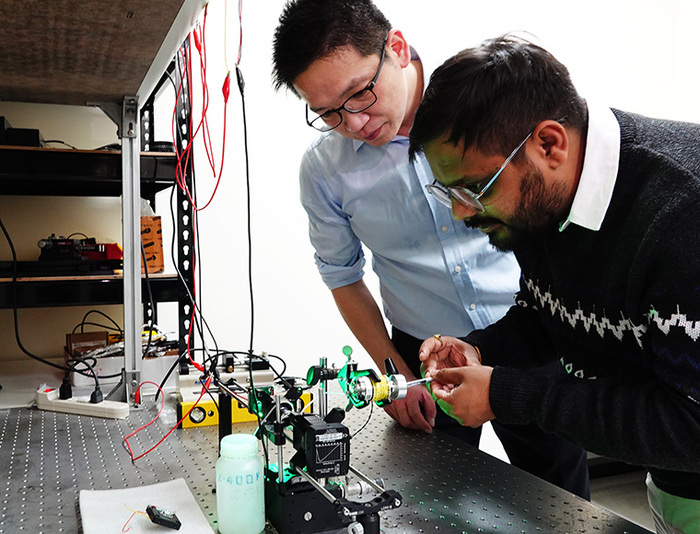
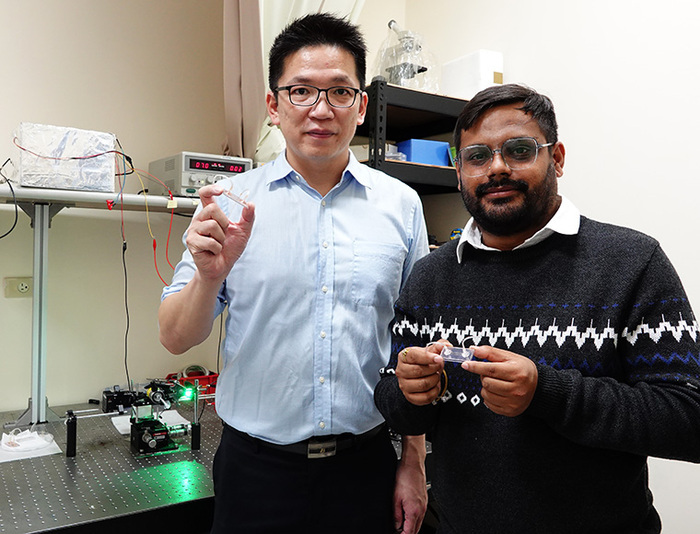
Henceforth, Chang led Indian doctoral student Devesh Barshilia and collaborated with Chau, Lai-Kwan, a Professor in the Department of Chemistry and Biochemistry of CCU, to develop a rapid, label-free optical planar waveguide-particle plasmon resonance microfluidic biosensor. Chang explains that when the body's bacterial load becomes excessive, it releases specific proteins. The biosensor's biochip designed by the CCU team detects these particular proteins in the blood, offering not only qualitative analysis but also rapid quantification.
The CCU team employed low-cost glass slides to fabricate optical biochips, which, when paired with the nano-gold technology developed by Professor Chau, are able to enhance the sensor's sensitivity. Combined with the CCU team-developed system platform, a single droplet of blood deposited onto the sensor's biochip yields protein quantification results within a mere 15 minutes. Chang asserts that while developing biosensors may not be extraordinary, considering cost is crucial when promoting a technology. Balancing performance and cost is no easy feat, yet the CCU team's biosensor not only boasts exceptional performance but also achieves similar functionality to a market chip priced at NT$1,500, all for a modest cost of under NT$30.
Furthermore, regarding the light source utilized by the sensor, rather than employing a laser light source costing nearly NT$300,000 as typical systems do, the system developed by Chang incorporates a more budget-friendly LED light and optical component assembly. The overall cost of this self-assembled technology is estimated to be under NT$30,000, which is roughly ten times cheaper than general systems.
"There is a term called 'point-of-care', and our aim is to develop a rapid screening biochip that can be easily used at home, offering portability, mobility, and a low operational threshold without the need for professional personnel," says Chang. This type of sensor is particularly beneficial in rural areas. The biosensor developed by the CCU team can be applied not only for sepsis detection but has also been featured in the Royal Society of Chemistry's prestigious journal, Analyst, as well as on its cover. Chang points out that they are currently applying for three technological patents while collaborating with the National Taiwan University Hospital Yunlin Branch for rapid myocardial infarction screening. They continue to refine the technology, working towards the goal of applying for the National Science and Technology Council's incubation program and establishing a startup company.
Click Num: